
Chat vs. Voice: Which AI Agent Does Your Shopify Store Actually Need?
Chat AI or voice AI for your Shopify store? A practical comparison of when each wins, what they cost, and why most stores need both.
Every Shopify AI chatbot comparison you'll read online argues about features. Wrong frame. The real question isn't which tool has more integrations, it's where your customers actually get stuck, and whether they get stuck typing or talking.
We've read enough support inboxes and listened to enough call recordings to tell you: chat and voice solve different problems, for different customers, at different moments. Here's how to figure out which one your store needs first, without the vendor spin.
What Chat AI Is Actually Good At
Chat is your workhorse. It handles the silent majority of ecommerce questions: order status, sizing, shipping times, returns, "is this in stock," "does this work with X." These are questions customers prefer to ask quietly, often while multitasking, often at night.
Chat wins when the answer benefits from being visual and persistent. A size chart, a tracking link, a discount code- those belong in a chat window the customer can scroll back to. Chat also scales infinitely: fifty simultaneous conversations cost the same as one.
If your inbox is full of short, factual, repetitive questions, chat AI clears 70–80% of it on day one.
What Voice AI Is Actually Good At
Voice is your trust-builder. Certain customers, often your highest-value ones, pick up the phone. Older demographics, big-ticket purchases, urgent problems, complicated situations ("I ordered the wrong size but it already shipped and I leave for a wedding Thursday"). These customers don't want to type paragraphs. They want to talk, be understood, and get it fixed.
Historically, phone support was the first thing small stores cut, because staffing a line is brutally expensive. Voice AI changes that math. An AI voice agent answers on the first ring, 24/7, looks up the order while the customer is mid-sentence, and never puts anyone on hold.
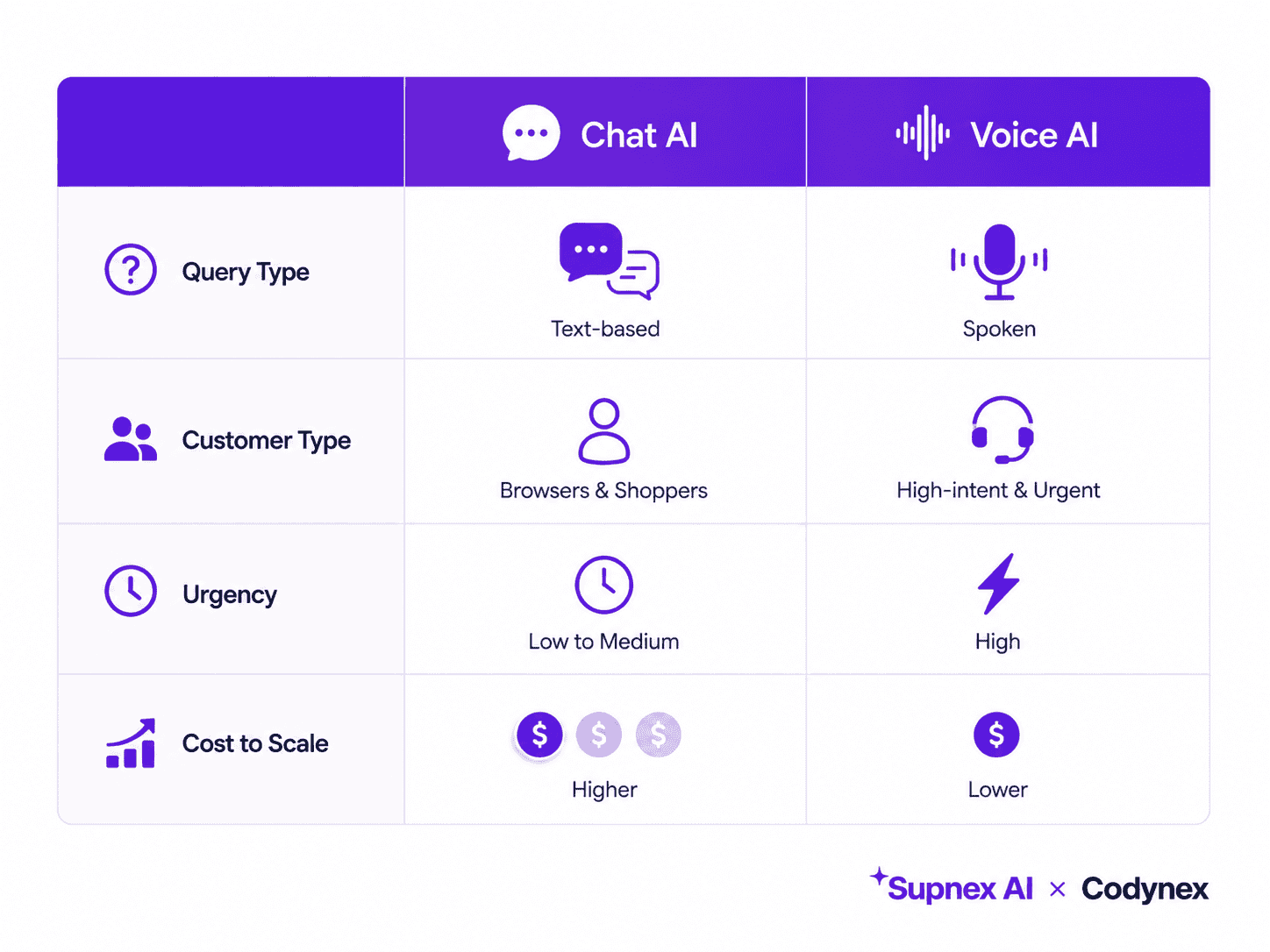
For stores selling products over ~$150, or serving demographics that distrust chat widgets, voice coverage measurably lifts conversion and repeat purchase. A missed call is usually a lost sale; an answered one is often a saved order.
The Honest Decision Framework
Ask yourself three questions.
1. What's your average order value? Under $75 and mostly repeat consumables? Chat first. Over $150, considered purchases, or gifts? Voice matters more than you think.
2. Where do questions currently arrive? Audit one week. If your inbox and DMs dominate, start with chat. If you're getting voicemails, missed calls, or "please call me" emails, that's voice demand you're already ignoring.
3. Who's your customer? Gen Z will happily chat. A 55-year-old buying a $400 espresso machine wants a phone number on your site, and its presence builds trust even for people who never call.
Why the Real Answer Is Usually "Both, One Brain"
Here's the trap in most Shopify AI chatbot comparisons: they assume you're picking one tool for chat and another for voice. That means two systems, two setups, two sets of answers that drift out of sync. Your chatbot says returns take 14 days; your phone system says 30. Customers notice.
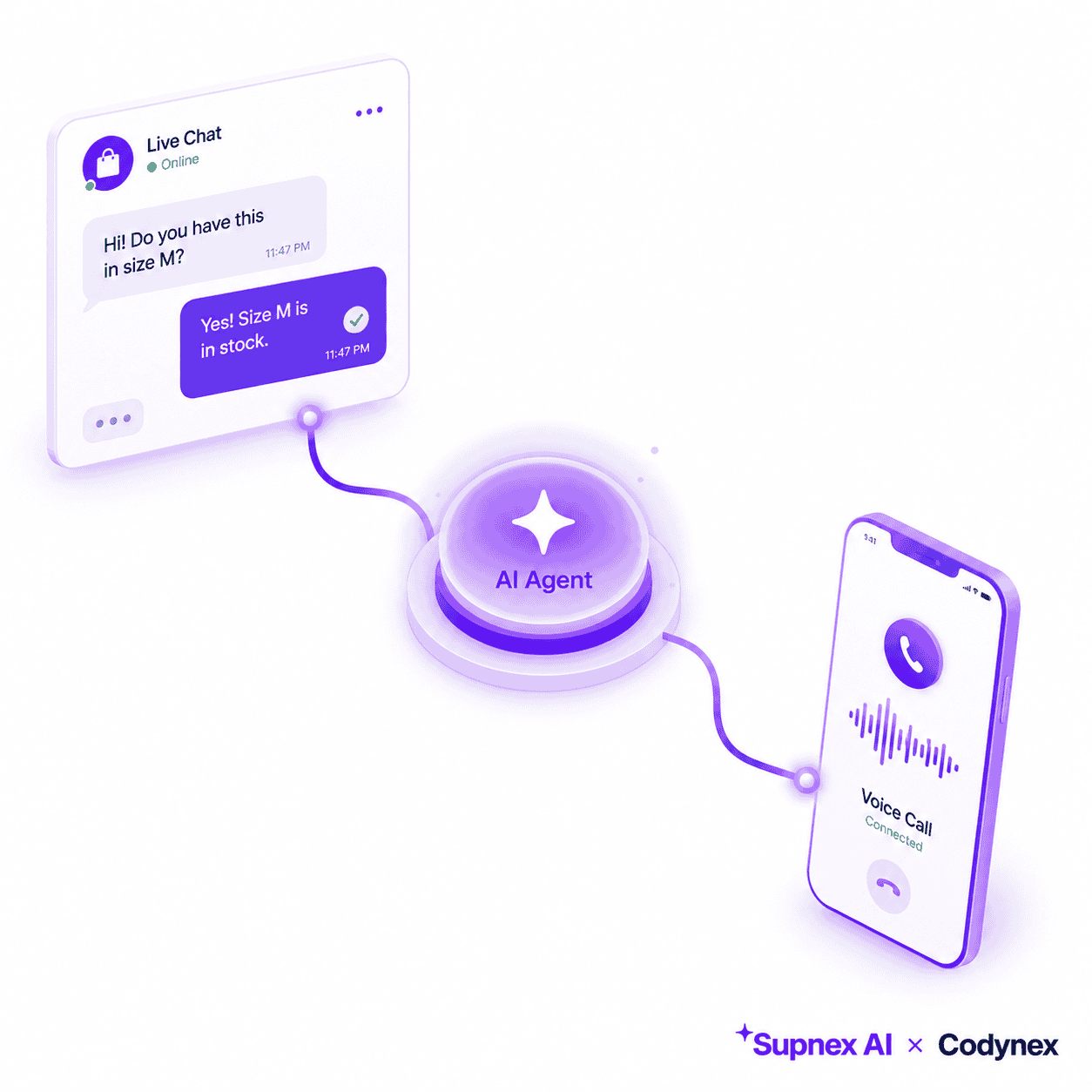
Supnex AI, built by Codynex, runs chat and voice from a single agent trained once on your store. Same product knowledge, same policies, same live Shopify order data, whether the customer types it into your widget at midnight or calls the number on your contact page at noon. One brain, two mouths.
A supplements brand we work with started chat-only, cleared their inbox backlog in the first month, then flipped on voice. Within weeks, voice was handling 20% of total volume, almost all from customers over 45, with a higher average order value than their chat users. That revenue was invisible until there was a phone line to catch it.
Start Where the Bleeding Is Worst
You don't need to solve everything at once. Start with the channel where you're visibly losing money today; for most stores, that's chat, because the volume is bigger. Then add voice when you're ready, without retraining anything, because it's the same agent.
The comparison that matters isn't chat versus voice. It's answered versus unanswered.
Not sure which channel your store is bleeding from? Book a Supnex demo, bring one week of your support inbox and missed calls, and we'll map exactly which questions belong in chat, which belong in voice, and what handling both with one agent would look like for your store.
Comments ()