
Claude Opus 4.6 launched on February 5, 2026, delivering a massive 83% leap in reasoning and a 1 million token window for autonomous agent teams.
Benchmarks are one thing, but real-world performance is what matters. Claude Opus 4.6 proves itself by handling the complexity of live organizations, and that’s why the hype is real.
“Claude Opus 4.6 ... managing a ~50-person organization across 6 repositories. It handled both product and organizational decisions while synthesizing context across multiple domains, and it knew when to escalate to a human.”
— Yuchen Jin (@Yuchenj_UW) February 5, 2026
Sam wasn’t joking about being replaced by an AI CEO. pic.twitter.com/hfsWAJopLH
It’s not just the scale, it’s the model’s ability to understand context, act independently, and escalate when needed. That’s real proof the Agent Team architecture works.
On February 5, 2026, the ceiling for what we expect from artificial intelligence didn’t just move; it vanished. With the release of Claude Opus 4.6, we transitioned from models that help you code to models that engineer alongside you.
If you are a technical leader or a developer, the new benchmarks are a signal that the cost of shipping production grade software has fundamentally shifted.
The Abstract Reasoning Leap
The headline figure that has the industry talking is the ARC AGI 2 score. This benchmark tests a model’s ability to solve novel problems it hasn't encountered in its training data, representing true out of the box thinking.
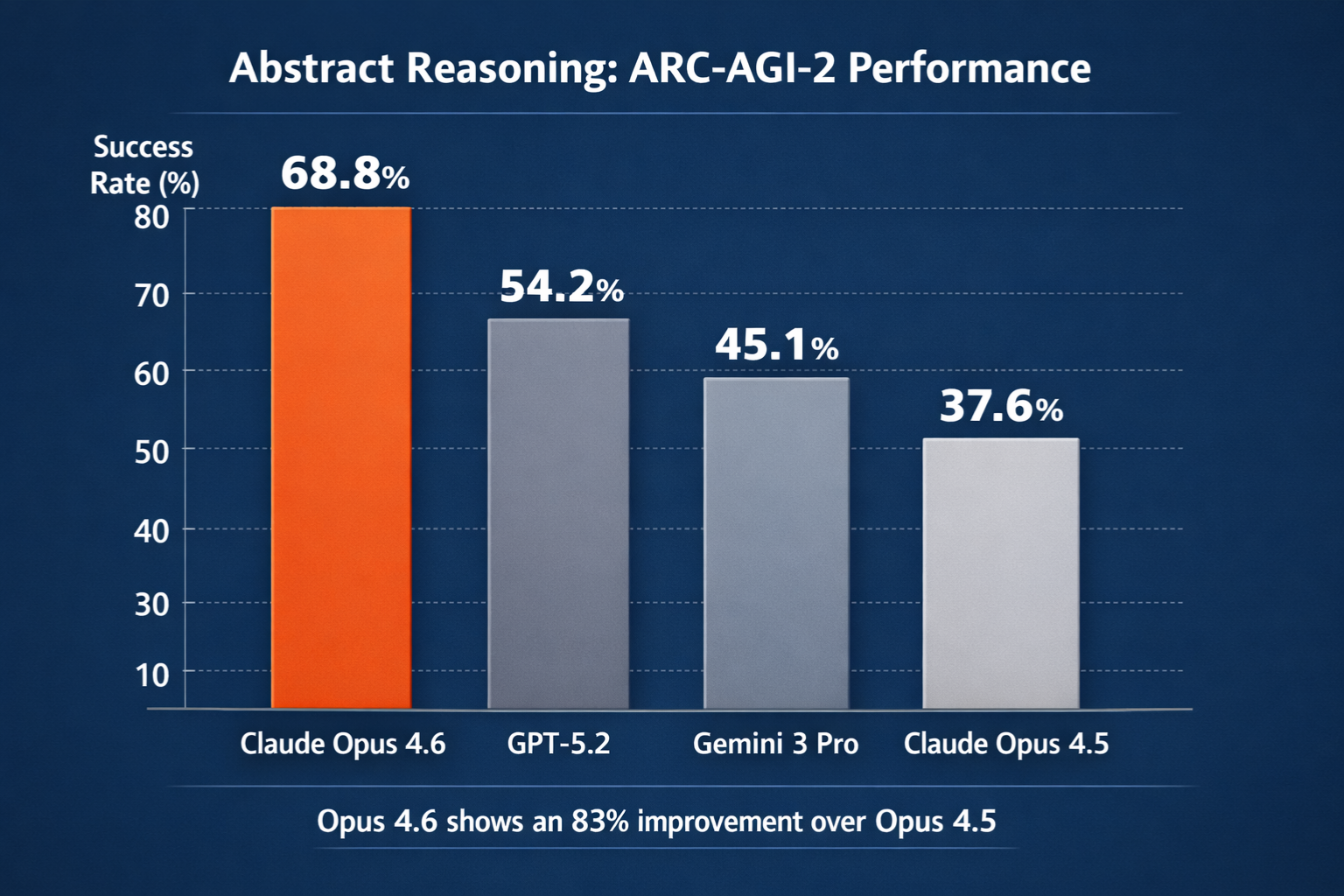
- Opus 4.6 Performance: 68.8%
- The Competition: It effectively distances itself from GPT-5.2 (54.2%) and Gemini 3 Pro (45.1%), representing an 83% improvement over the previous Opus iteration.
For your team, this means fewer hallucinations when dealing with custom business logic or proprietary frameworks that do not exist in public documentation.
Agentic Coding (Beyond the Autocomplete)
Traditional benchmarks like SWE-bench are becoming less relevant than Terminal-Bench 2.0, which measures if an AI can actually operate a terminal, run git commands, and fix bugs autonomously.
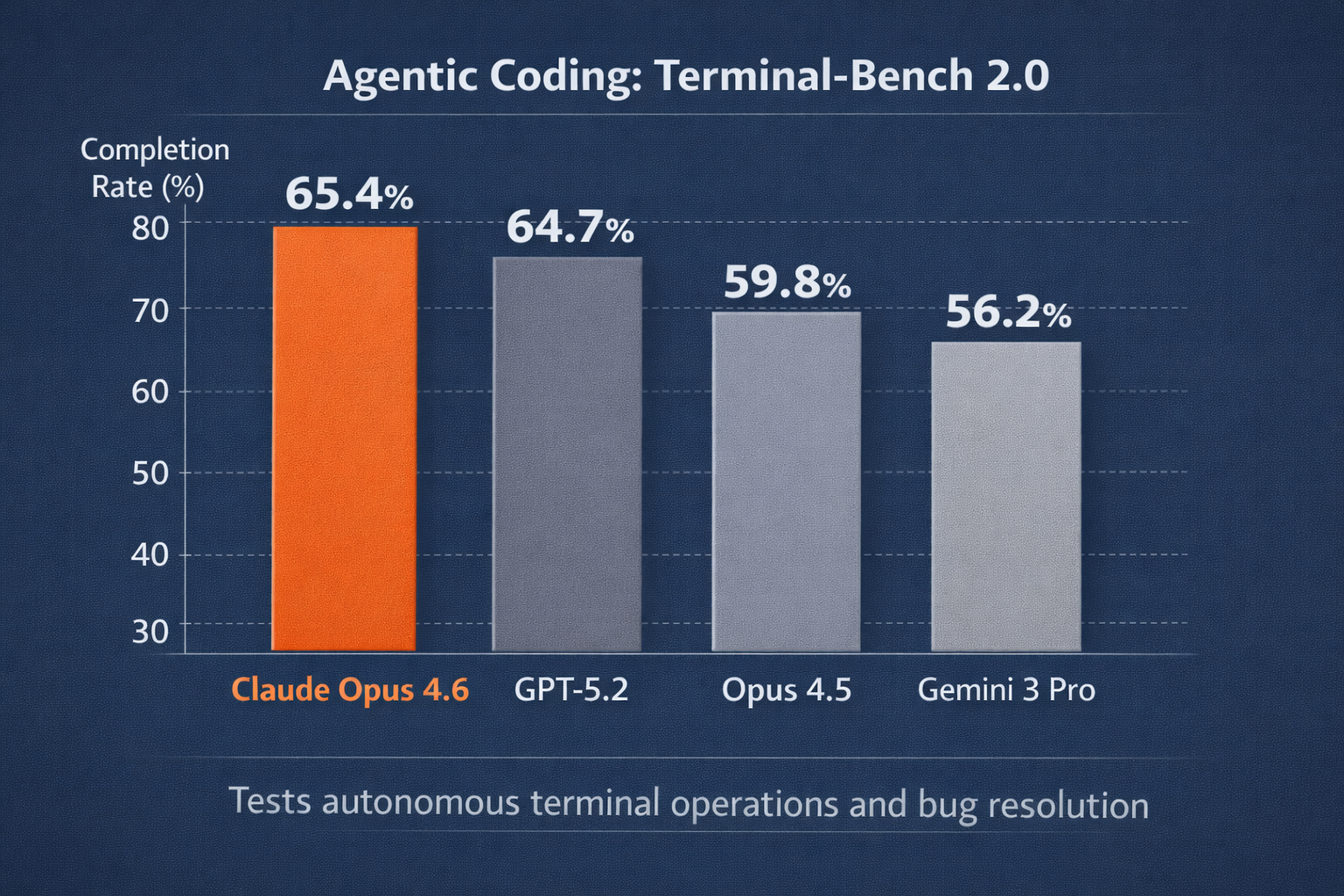
- Real World Mastery: Opus 4.6 hit a 65.4% success rate on terminal based tasks.
- Production Readiness: It maintained a dominant 80.8% on SWE-bench Verified, meaning it can resolve real GitHub issues with the precision of a senior human developer.
This capability enables the Agent Team workflow: deploying multiple Claude instances to handle frontend, backend, and testing in parallel. All of them coordinate like a real engineering squad
The 1 Million Token Reality (Zero Context Rot)
A massive context window is useless if the model forgets what happened in the first paragraph. The MRCR v2 benchmark measures information retrieval within long contexts.
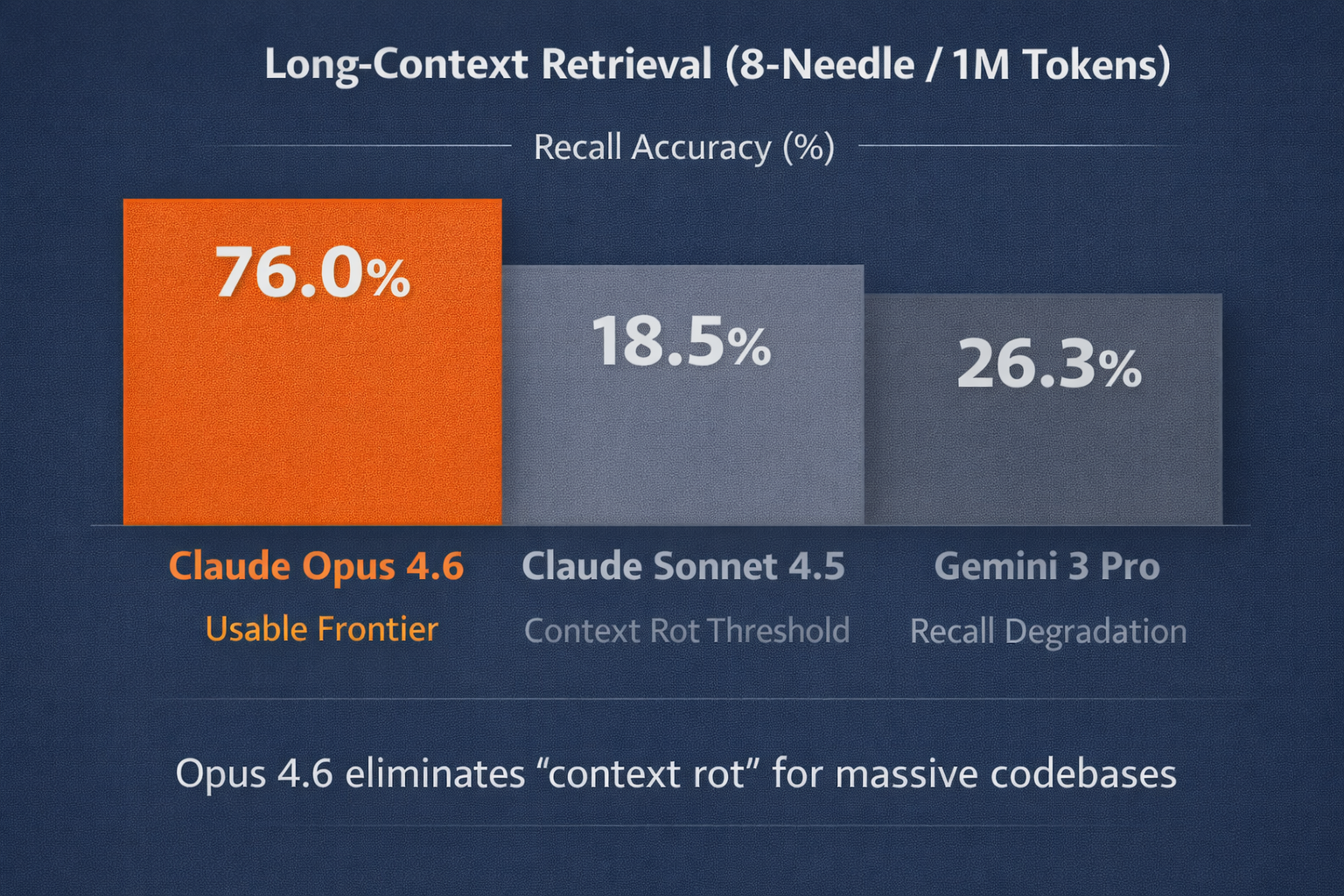
- Recall Accuracy: Opus 4.6 scored 76% on deep retrieval, compared to just 18.5% for mid-tier models like Sonnet 4.5.
- What this enables: You can now feed a 28,000+ line repository into a single prompt to trace stack-wide bugs or generate documentation that understands your entire architectural evolution.
Key Observations from Benchmarks
The data from the February 5th launch reveals a specific strategy behind Opus 4.6. It is not just a faster version of its predecessor; it is a model re-engineered for autonomy and reliability.
- The Shift from Action to Sustained Action: While previous models could write a single function well, Opus 4.6 is built for long horizon tasks. Its high scores in Terminal-Bench 2.0 (65.4%) prove it can manage the trial and error process of real world engineering without getting stuck in a loop.
- A New Baseline for Abstract Reasoning: Crossing the 60% threshold on ARC-AGI-2 is a massive milestone. This indicates the model has moved past pattern matching and is now capable of true logic synthesis. For developers, this translates to an AI that actually understands your unique architecture instead of just guessing based on common templates.
- Context Without Degradation: The most significant observation in the MRCR v2 retrieval tests is the stability of the model. Unlike other models that show a "U-shaped" performance curve (where they forget the middle of a long prompt), Opus 4.6 maintains 76% accuracy across the full 1 million token window.
- Coding Precision Over Volume: Interestingly, while the model nearly doubled its reasoning scores, its SWE-bench Verified score (80.8%) remained consistent with Opus 4.5. This suggests Anthropic focused on making the model "smarter" about planning and self-correction rather than just generating more lines of code.
What This Means for Your Workflow
These observations suggest that the most effective way to use Opus 4.6 is as an Architect or a Team Lead. It is uniquely qualified to oversee multiple repositories, catch subtle concurrency bugs, and manage the high level planning that used to require constant human oversight.
Adaptive Thinking and Compaction
Anthropic introduced two features that make production deployment feasible for mid-sized teams:
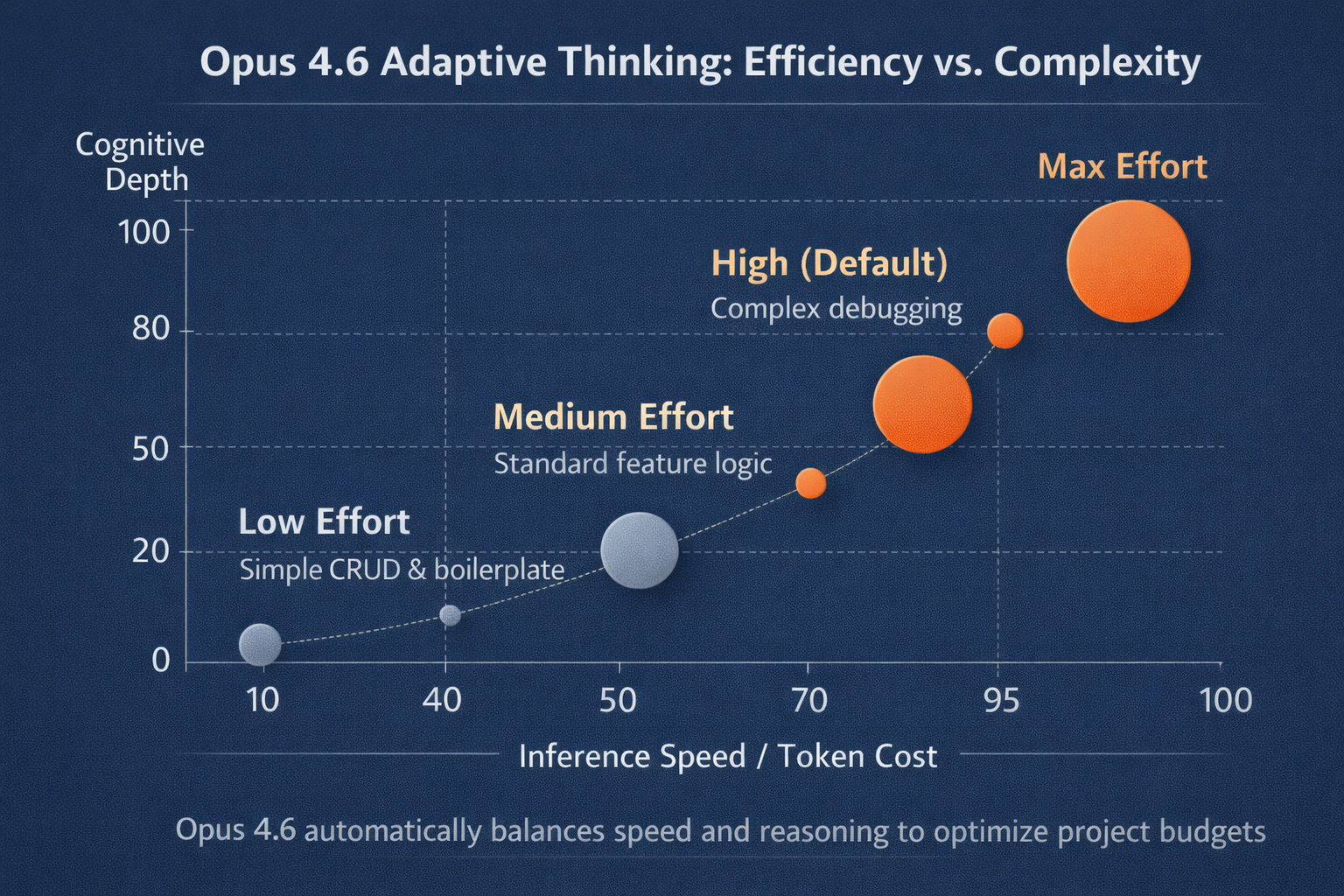
- Adaptive Thinking: The model now automatically scales its cognitive effort based on the task, saving you money on simple CRUD tasks while reserving deep reasoning for complex architecture.
- Context Compaction: This beta feature automatically summarizes old conversation turns, preventing the context rot that usually kills long running debugging sessions
The Economic Shift (Building More for Less)
The most disruptive part of Opus 4.6 isn’t just the code; it’s the math. A senior developer utilizing an Opus 4.6 agent team can often match or exceed the output of a traditional three person junior team for a fraction of the cost.
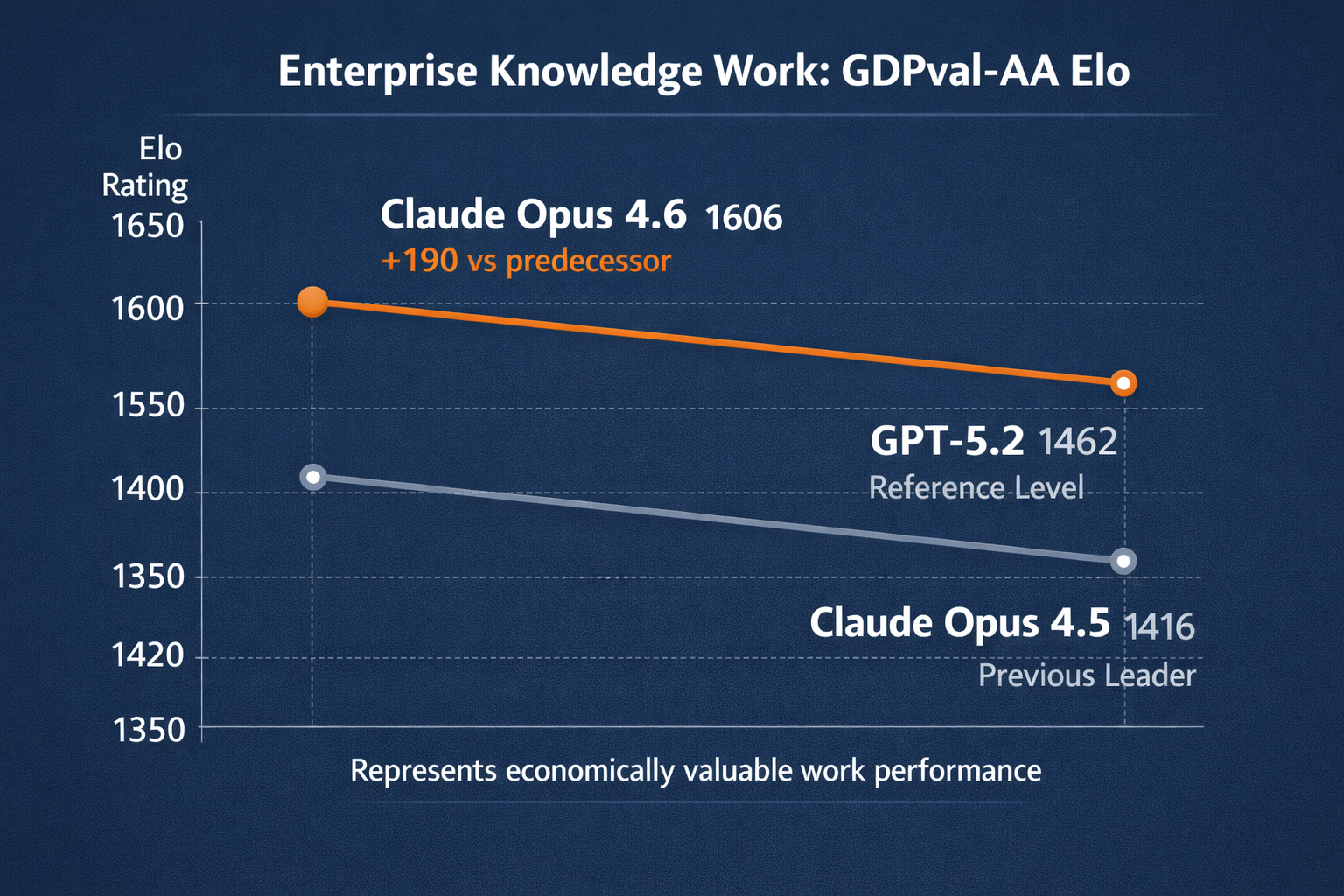
- Traditional Labor: Roughly $300K per year for two junior devs.
- AI-Augmented Labor: Roughly $216K per year for one senior dev plus heavy Opus 4.6 usage.
- Total Savings: Roughly $84,000 per year with increased velocity
How to Start with Codynex
At Codynex, we do not just talk about benchmarks. We build the validation frameworks and agent architectures that turn these numbers into shipped code.
The AI revolution in software didn’t happen overnight. It happened on February 5th. Visit codynex.com to lead the shift.
Comments ()