
Switching from Gorgias (or Zendesk, or Tidio) to Supnex Without Downtime
Looking for a Gorgias alternative for Shopify? The exact zero-downtime migration playbook for switching to Supnex, parallel run included.
Nobody stays with a support tool because they love it. They stay because switching feels like performing surgery on a moving patient. Your helpdesk holds your history, your macros, your widget, your workflows, and the nightmare scenario is a migration weekend where customers scream into a void while you rebuild everything.
So let's kill that fear with specifics. Here's the exact playbook stores use to move from Gorgias, Zendesk, Tidio, or any legacy stack to Supnex, with both systems running in parallel and not one customer hitting a gap.
First, Why Stores Switch At All
The pattern in every "Gorgias alternative Shopify" search is the same three complaints. Pricing that punishes growth, per-ticket and per-seat models mean your bill spikes the same month your promo works. Automation that's really just macros, canned replies still need a human to pick and send them. Organizing instead of resolving, beautiful dashboards of tickets that all still wait for you.
If those aren't your complaints, genuinely, stay put. Migration has a cost even when it's smooth, and a tool that's working shouldn't be swapped for novelty. But if you're paying more every quarter to sort tickets a machine should be answering, read on.
The Zero-Downtime Playbook: Parallel, Not Cutover
The single rule that removes all risk: never do a hard cutover. You don't switch systems on a Saturday night. You run Supnex alongside your current stack and shift traffic gradually as trust builds. Here's the sequence.
Days 1–2: Connect and learn. Install Supnex on your Shopify store. It ingests your catalog, policies, and order data in minutes (the ten-minute setup is real, we've written a whole post on it). Your Gorgias/Zendesk/Tidio setup keeps running untouched. Customers notice nothing.
Days 2–5: Shadow mode. Test Supnex privately against your greatest hits, pull your 30 most common real tickets from your current helpdesk and fire them at Supnex yourself. Tune tone and escalation rules. Still zero customer exposure.
Week 2: Partial traffic. Flip the Supnex widget live for a slice of the experience, most stores start with after-hours only, the hours their current setup was dark anyway. Pure upside: any question Supnex answers at 11PM is a question that previously waited overnight. Your old helpdesk still handles business hours.
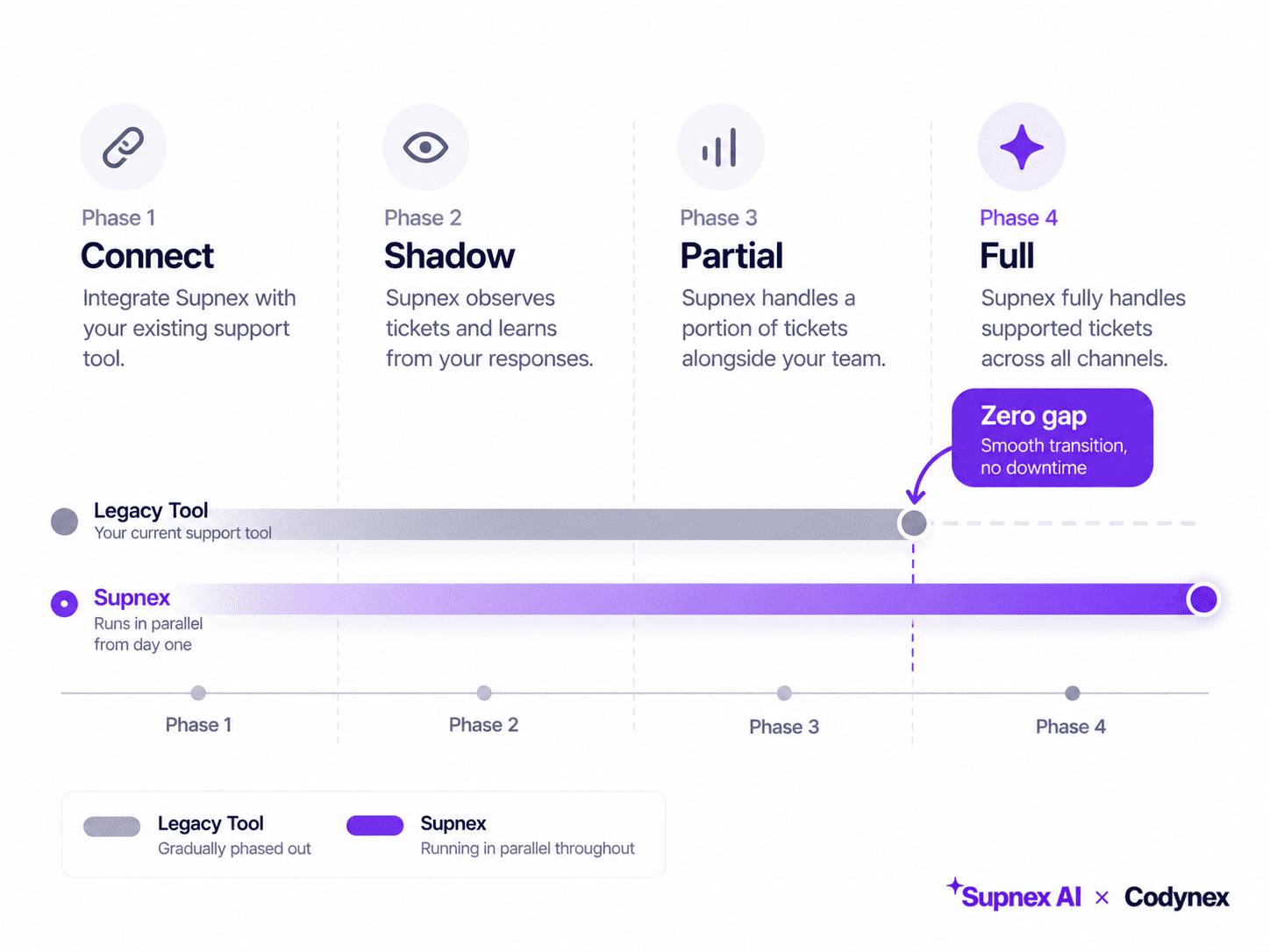
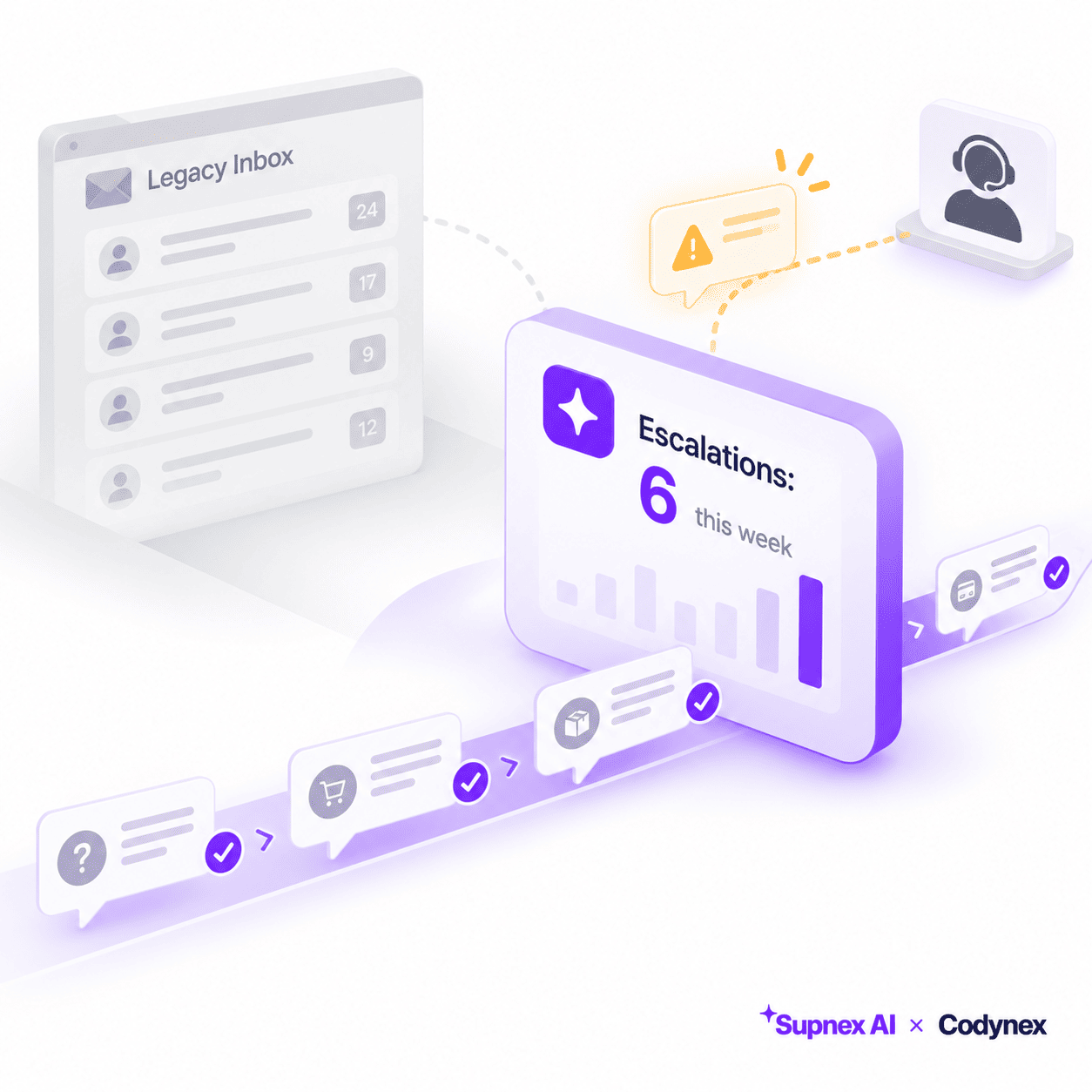
Weeks 3–4: Expand and route. As transcripts prove out, Supnex takes the front line around the clock. Escalations, the 20% needing humans, flow to your inbox or your existing helpdesk if you want to keep it as an internal case tracker during transition. Many stores run this hybrid for a month.
Week 5+: Retire the old bill. When the escalation queue is thin enough to live in a plain inbox (it usually is), you cancel the legacy stack. Export your ticket history first, it's your data. Total customer-facing downtime across the whole process: zero minutes.
What About My Macros, History, and Workflows?
Your macros mostly become unnecessary, they were canned answers to repetitive questions, and Supnex generates those answers from your live store data instead, so they never go stale when a policy changes. Your ticket history exports and archives cleanly. Your workflows simplify because the workflow was the queue, and the queue mostly stops existing.
Supnex AI, built by Codynex, was designed around this migration reality, because nearly every store that joins us is leaving something, and the leaving has to be boring for it to be safe.
A Real Switch, By the Numbers
A pet supplies brand ran this exact playbook leaving a $412/month Gorgias plan. Week one: shadow testing. Week two: after-hours only, where Supnex resolved 84% of conversations untouched. Week four: full traffic, with 11 escalations a week landing in a shared Gmail. Week six: Gorgias cancelled. Their support costs dropped 81%, their median response time went from 6 hours to 5 seconds, and, their words, "the migration was the least dramatic thing we did that month."
That's the goal. Boring migration, dramatic results.
Thinking about leaving your helpdesk but dreading the move? Book a Supnex demo and we'll map your specific migration, your current tool, your ticket volume, your workflows, into a dated, parallel-run plan where no customer ever hits a gap.
Comments ()