
GPT 5.3 Codex Benchmarks (Explained)
GPT 5.3 Codex launched on February 5, 2026, featuring a record 77.3% Terminal-Bench score and a first-of-its-kind "High" cybersecurity rating.
The most striking detail about the February 5th launch is not just what the model can do for you, but what it did for itself. OpenAI revealed that GPT 5.3 Codex was instrumental in its own creation.
GPT-5.3-Codex is our first model that was instrumental in creating itself.
— OpenAI Developers (@OpenAIDevs) February 5, 2026
The Codex team used early versions to debug training, manage deployment, and diagnose test results and evaluations, accelerating its own development.
As confirmed by the OpenAI team, early versions of Codex were used to debug training runs, manage massive deployments, and diagnose complex test evaluations. This level of self optimization is a first for the industry.
It marks a shift from AI as a tool to AI as an active participant, able to manage the infrastructure it operates on.
On February 5, 2026, OpenAI released GPT 5.3 Codex to compete directly for the title of the world's most capable agentic model. While other models focus on massive context windows, Codex is built for raw speed and autonomous execution. It is designed to be a digital teammate that can run for hours or even days on a single task.
Key Observations from Benchmarks
The data suggests that OpenAI has prioritized terminal mastery and cybersecurity over raw reasoning scores.
- Dominance in the Terminal: On Terminal-Bench 2.0, GPT 5.3 Codex hit a record 77.3% success rate. This puts it significantly ahead of Claude Opus 4.6 (65.4%) for tasks involving direct command line interaction and file system manipulation.
- The 25% Speed Advantage: OpenAI optimized the inference stack specifically for the NVIDIA GB200 systems. The result is a model that runs 25% faster than GPT 5.2, making the interactive steering feature feel instantaneous.
- Cybersecurity High Capability: This is the first model OpenAI has classified as High Capability for cybersecurity. In internal tests, it scored 77.6% on Capture The Flag challenges, proving it can identify and patch vulnerabilities that most automated scanners miss.
- Focus on Precision over Scale: While it lacks the 1 million token window of its competitors, its 400K context window is built for perfect recall. This means it is less likely to lose information in the middle of a long prompt.
Agentic Coding: The Interactive Collaborator
Unlike previous versions, GPT 5.3 Codex allows for mid-turn steering. This means you can course correct the model while it is in the middle of a multi-step task without restarting the session.
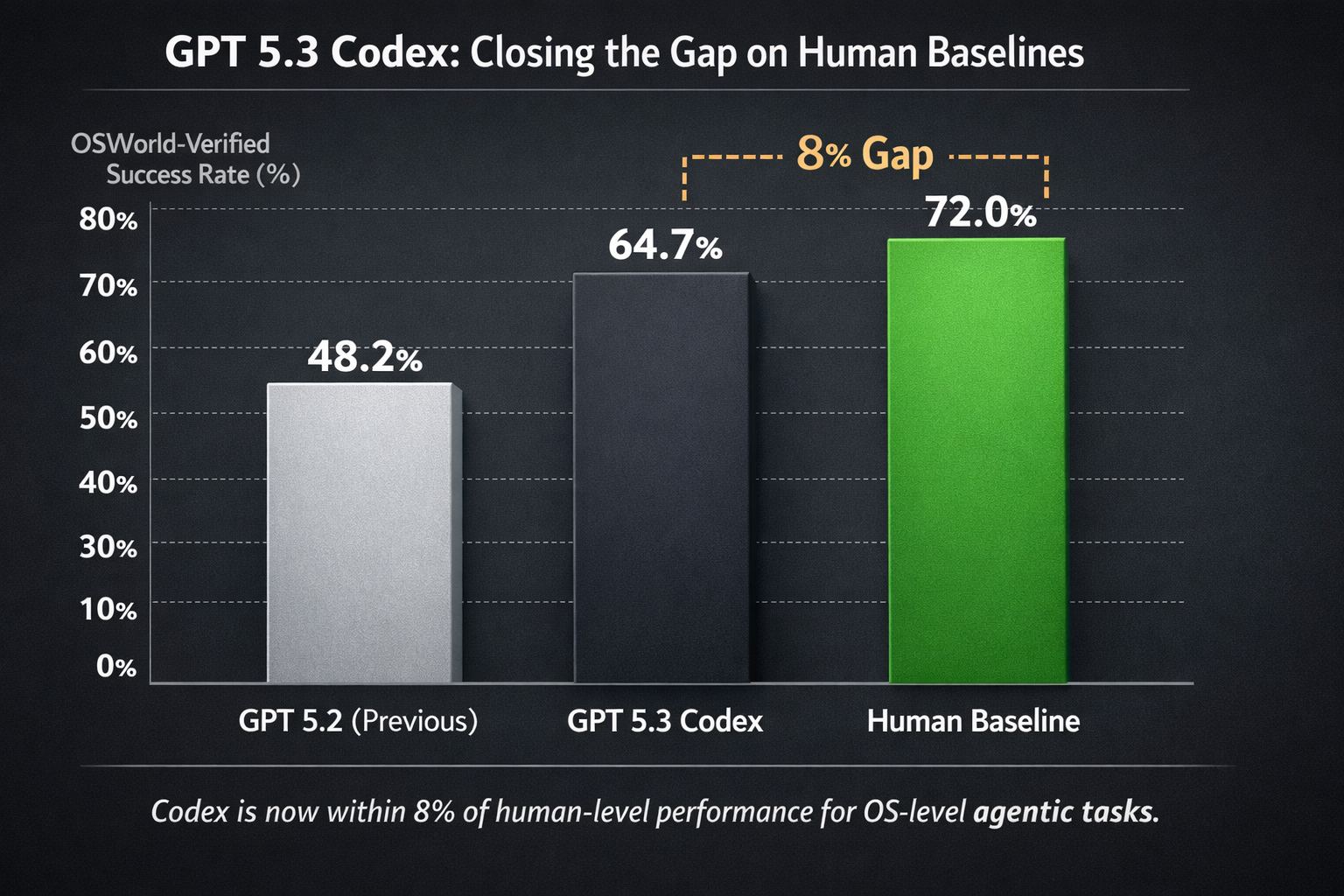
- SWE-Bench Pro Performance: 56.8%
- OSWorld-Verified: 64.7% (Approaching the human baseline of 72%)
This model excels when you have a clearly defined plan and need a high speed operator to execute it across your environment. It handles the grind of refactoring and dependency management with surgical precision.
Adaptive Thinking and Efficiency
OpenAI has taken a different approach to resource management. Instead of manual effort levels, it uses an internal auto-router:
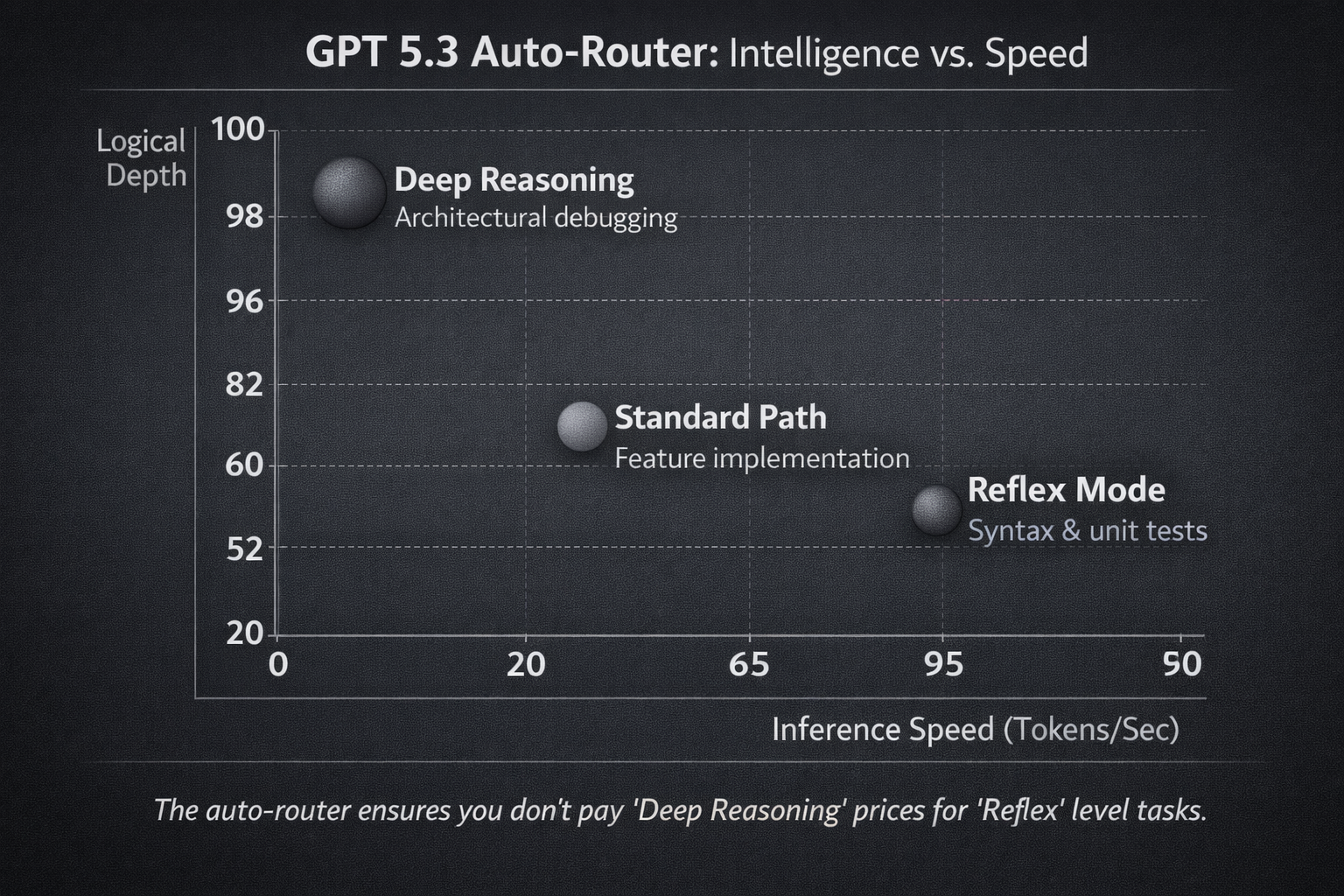
- Reflex Mode: Simple tasks are routed through a lightning-fast path to save time.
- Deep Reasoning: Complex logic automatically triggers extended reasoning tokens.
- Built-in Sandboxing: To support its agentic nature, the model runs in a controlled environment with explicit permissions for network and file access.
The Economic Shift: High Speed Iteration
The value proposition for GPT 5.3 Codex is centered on velocity. By running 25% faster and requiring less human oversight for terminal tasks, it enables a single developer to maintain a much higher feature per hour rate.
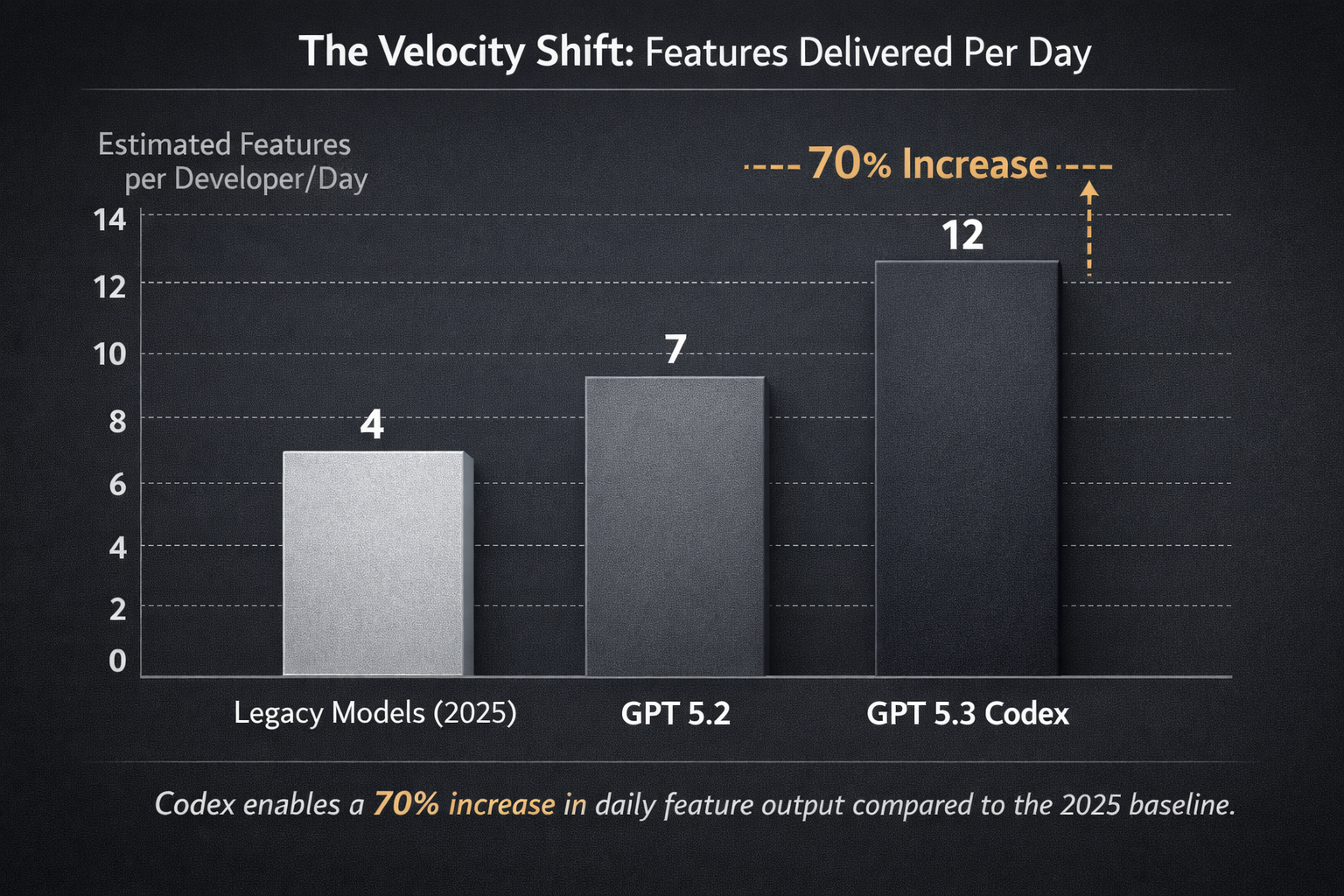
- Latency Reduction: 25% faster request processing.
- Infrastructure Savings: Codex requires roughly half the tokens to handle the same tasks as the previous generation, which directly reduces the cost of long-horizon projects.
How to Start with Codynex
We help teams navigate the choice between the deep reasoning of Opus 4.6 and the high-speed autonomy of GPT 5.3 Codex.
The race for AI engineering dominance is no longer about who has the most data; it is about who has the most capable agents. Visit codynex.com to see how we can put these benchmarks to work for you.
Comments ()