
5 Questions Your Customers Ask Before Buying, And What It Costs When Nobody Answers
Five pre-sale questions decide most Shopify purchases. Here's what each unanswered one costs you, and how to answer all five instantly.
Every product page has an invisible checkout blocker: the one question the customer needs answered before they'll commit. Not after they buy, before. Miss that window and there's no ticket, no complaint, no trace. Just a quiet back-button and a sale that never shows up anywhere in your analytics as "lost to silence."
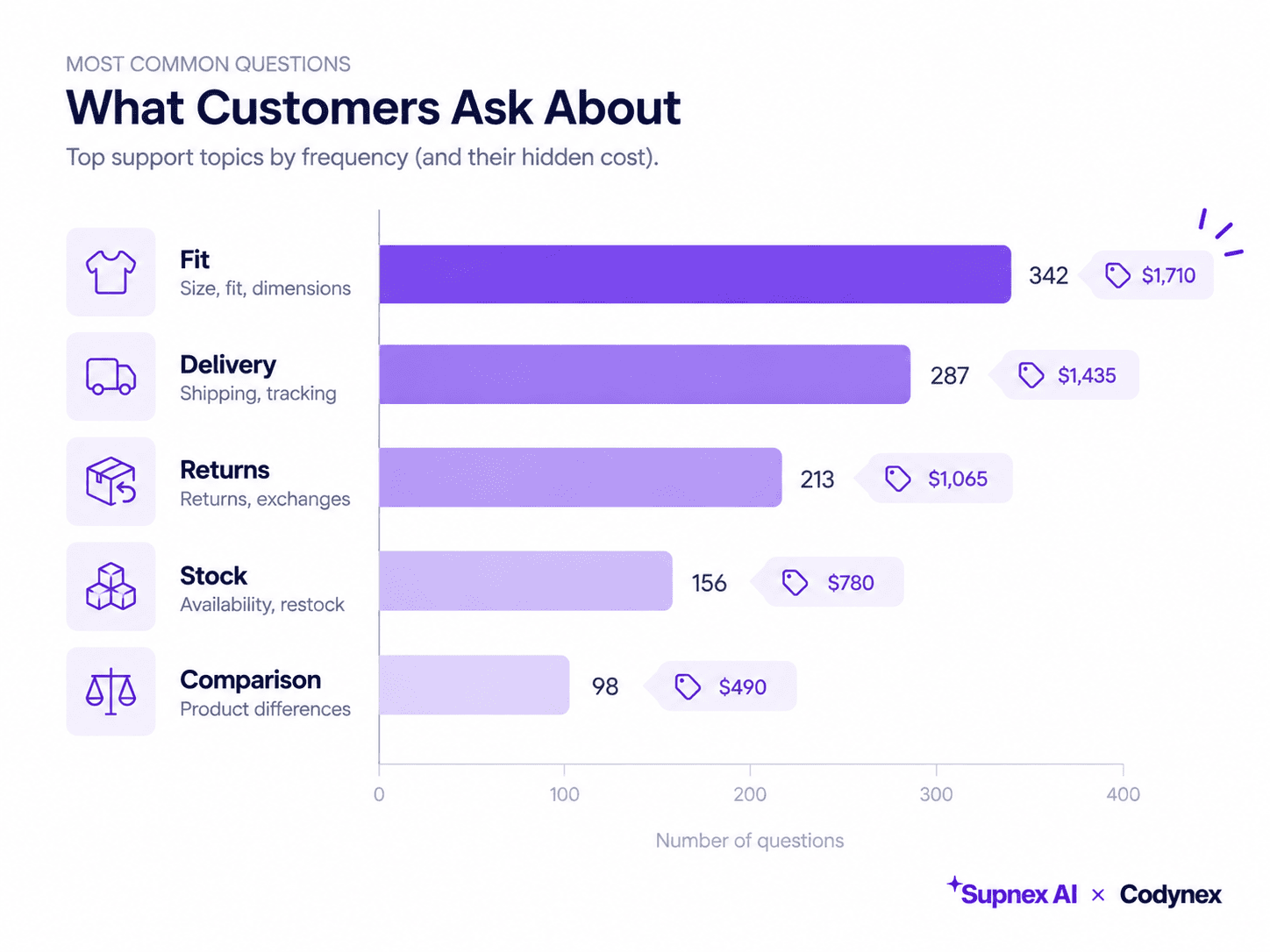
After reading a truly unreasonable number of Shopify support inboxes, we can tell you the pre-sale questions cluster into five buckets. Here they are, with what each one costs when it goes unanswered.
1. "Will it fit / work for me?"
The sizing and compatibility question. "Does the medium run small?" "Will this case fit the 2023 model?" "Is this okay for sensitive skin?" This is the single biggest pre-sale category, and it's also the most personal, the customer isn't asking about your product in general, they're asking about their body, their device, their situation.
Unanswered, this question doesn't just lose the sale. It creates the worst alternative: the customer guesses, guesses wrong, and becomes a return plus a lukewarm review. Answered well, it does the opposite, right-size guidance is your cheapest returns-reduction program.
2. "When will it arrive?"
Not your shipping policy page, their specific case. "I need it by Friday for a birthday." "Do you ship to Canada, and how long?" Deadline buyers are the highest-urgency, lowest-patience segment you have. They will not wait for an email reply; the deadline is the whole point. Whoever answers first, wins the order. Usually that's Amazon, purely on certainty.
3. "What if it doesn't work out?"
The returns question is really a risk question. First-time buyers on an unfamiliar brand are calculating downside: if this disappoints, am I stuck? A clear, fast, humanly-phrased answer ("free returns within 30 days, we email you a label, takes two minutes") removes the risk and unlocks the card. Silence keeps the risk priced in, and the cart abandoned.
4. "Is this actually in stock / when does it restock?"
Sounds trivial. Isn't. Restock questions are pure buying intent, the customer is literally asking permission to give you money later. Every unanswered restock question is a warm lead thrown away, because the customer won't check back; they'll have bought elsewhere by the time your restock email tool fires.
5. "What's the difference between these two?"
The comparison question, your Original vs. your Pro, the 30ml vs. the 50ml, this bundle vs. that one. Confusion is a conversion killer with a specific signature: high product-page views, high cart adds, weak checkout. The customer wasn't unconvinced. They were undecided, and deciding felt like work, so they postponed. "Postponed" in ecommerce means "gone."
The Compound Cost of Five Silences
Individually, each miss is one order. Together, they're structural. If pre-sale questions touch even 4% of your sessions and half go unanswered outside business hours, a store doing 20,000 sessions/month is leaving 400 high-intent conversations on the table, the exact conversations closest to money. This is why two stores with identical traffic and identical products can have wildly different conversion rates. One answers at the moment of intent. The other answers tomorrow.
Answering All Five, Instantly, From Your Own Data
Here's what makes these five beautiful to automate: every answer already exists in your store. Size charts, shipping rules, return policy, live inventory, product specs, it's all in Shopify. What's missing is something that can deliver those answers at the moment of intent, at 10PM, in a way that feels like a knowledgeable human and not a FAQ link.
That's precisely what Supnex AI, built by Codynex, does. It reads your entire catalog and policies, connects to live inventory, and answers all five question types instantly, in chat on the product page or by voice on your phone line. The comparison question gets a genuine, spec-based recommendation. The deadline question gets a real answer from your shipping rules. The restock question captures the lead and answers from live stock data.
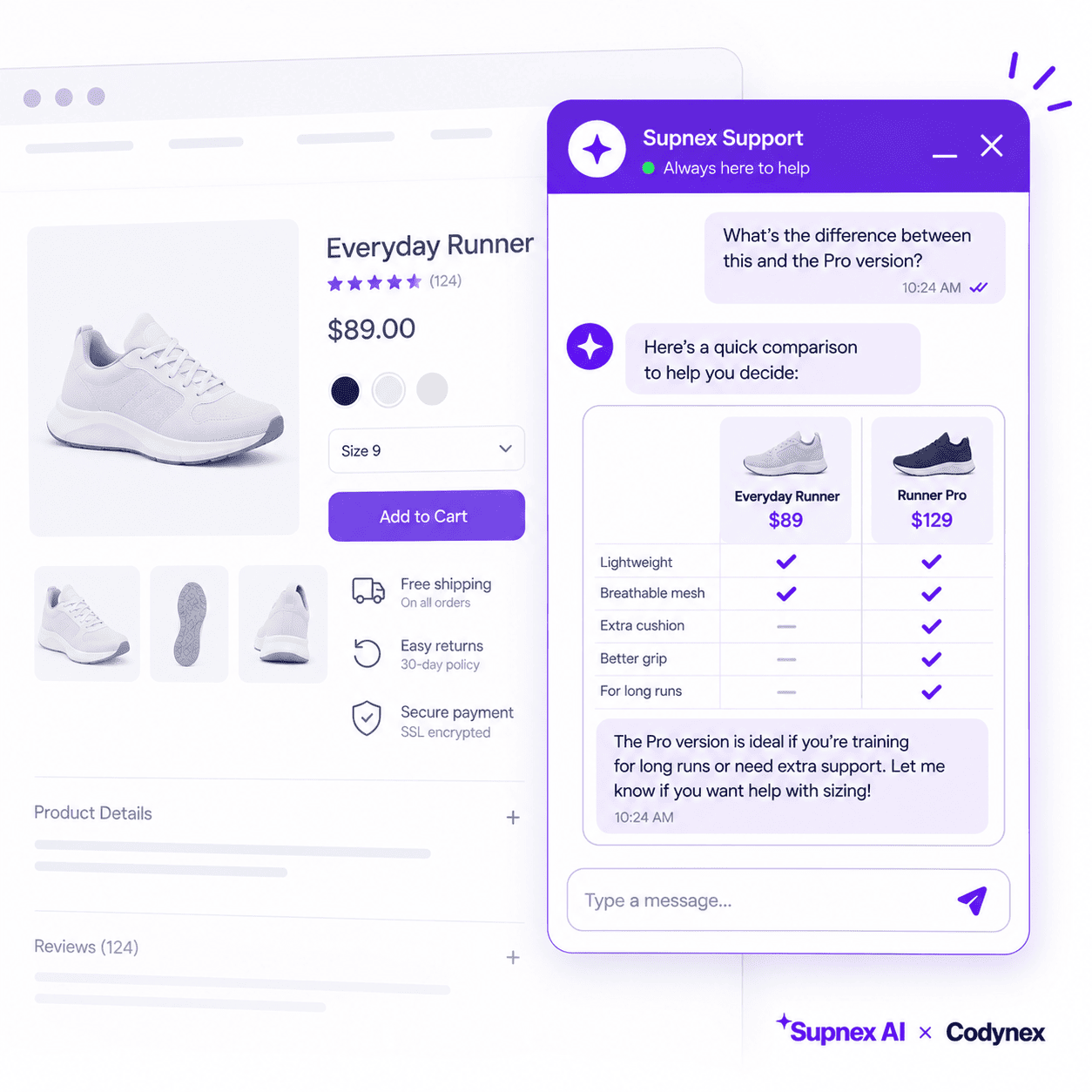
One accessories brand saw their product-page chat conversations convert at 31% after switching to Supnex, against a 2.4% site average. Not because the AI is magic. Because a question asked at the moment of intent, answered at the moment of intent, is the easiest sale in ecommerce.
Which of the five is your store fumbling most? Book a Supnex demo, we'll pull the pre-sale questions from your actual inbox, sort them into these five buckets, and show you each one being answered on your own product pages in real time.
Comments ()