
The $79 Tool Replacing $749/mo Support Software for Shopify
Support stacks quietly balloon to $749/mo. Here's how affordable Shopify support AI replaces the whole pile for $79, with the math shown.
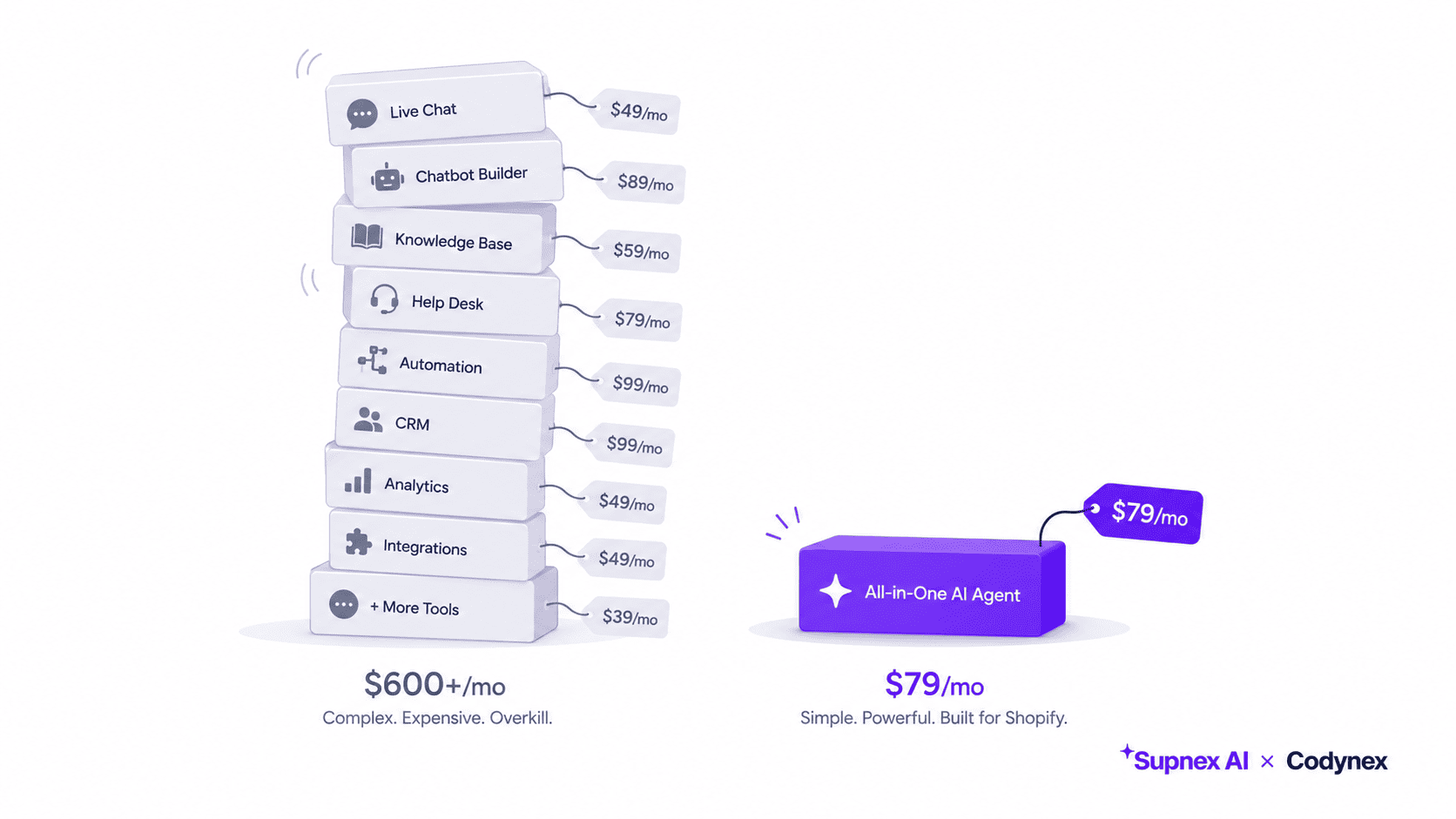
Open your app subscriptions and add up what you actually pay for "support." Not what you think you pay, but what the receipts say.
For a typical growing Shopify store, it looks something like this: a helpdesk at $150–$360/month depending on ticket volume. A live chat add-on. A separate chatbot tool at $99 – $249. An order-tracking app. Maybe a phone system nobody answers. Per-seat fees as you add a VA. Overage charges the month you run a good promo, because yes, your helpdesk charges you more when you succeed.
Stack it up and $500–$749/month is normal. And here's the uncomfortable part: most of that stack doesn't answer a single customer. It organizes unanswered customers.
You're Paying for Ticket Management, Not Ticket Resolution
That's the core scam of the traditional support stack, not fraud, just a misaligned product. Helpdesks are built to sort, tag, route, and dashboard your tickets. Beautiful queues of waiting customers. But every actual answer still comes from a human you also have to pay.
So your real cost is $749 in software plus the labor to work the queue. The software bill was never the whole bill; it was the cover charge.
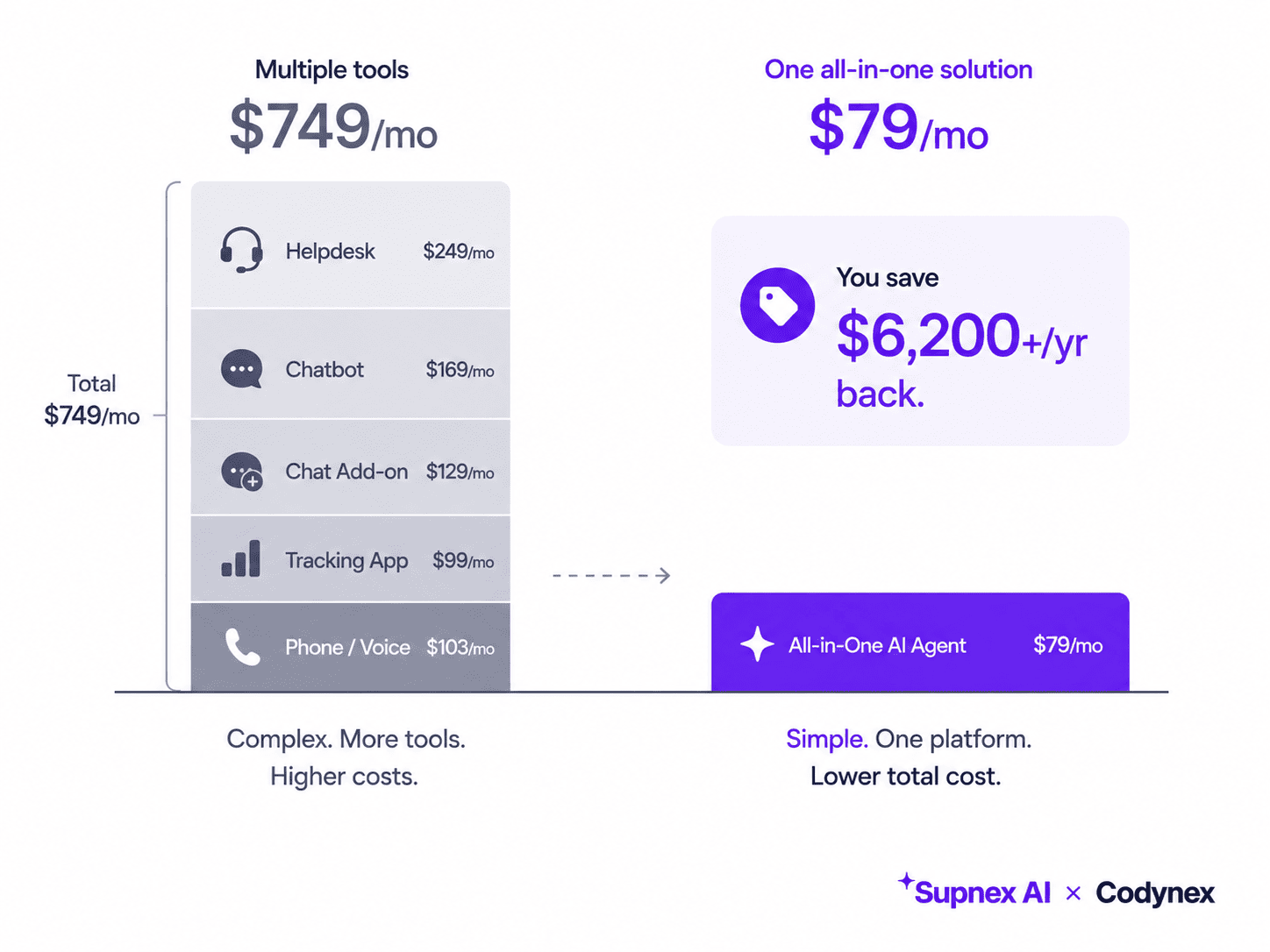
What the Math Looks Like When the Tool Does the Answering
Supnex AI, built by Codynex, starts at $79/month, and the reason it can replace the stack is that it collapses the categories. It is the chat widget. It is the order-tracking answerer. It is the after-hours coverage. It is the phone line, if you turn voice on. And critically, it resolves the tickets itself, pulling live answers from your Shopify products, policies, and order data, instead of arranging them in a prettier queue.
For most stores, 70–80% of inbound volume is repetitive and factual: where's my order, what's your return policy, does this fit, when will this restock. That entire band gets answered instantly, at $79 flat. What's left- the genuinely human 20%- lands with you or your team with full context attached.
The savings math for a store currently paying $600/month in tools: that's $521/month back, over $6,200/year, before you count a single hour of labor saved. Count the labor, and it gets silly.
"Cheap" Usually Means "Worse." Why Doesn't It Here?
Reasonable question. Software this much cheaper is usually cheaper because it does less. The honest answer is that the traditional stack's price is an artifact of old architecture: per-seat pricing, per-ticket pricing, and separate tools for each channel all assume humans do the answering and vendors bill around them.
An AI agent breaks those assumptions. There are no seats to charge for. Answering 3,000 questions doesn't cost 10x answering 300. One agent covers chat and voice, day and night. The unit economics are genuinely different — the price isn't a discount; it's a different cost structure being passed to you.
What you should stay skeptical about is accuracy, not price. That's why we tell every founder: test it on your own catalog before you trust it. Ten minutes of setup buys you that proof.
Where the Money You Save Actually Goes
The stores that switch don't usually pocket the difference; they redeploy it, and that's the fun part. $500/month is a real ad budget for a small store. It's a freelance email marketer. It's better packaging. It's a Klaviyo tier upgrade that actually grows revenue.
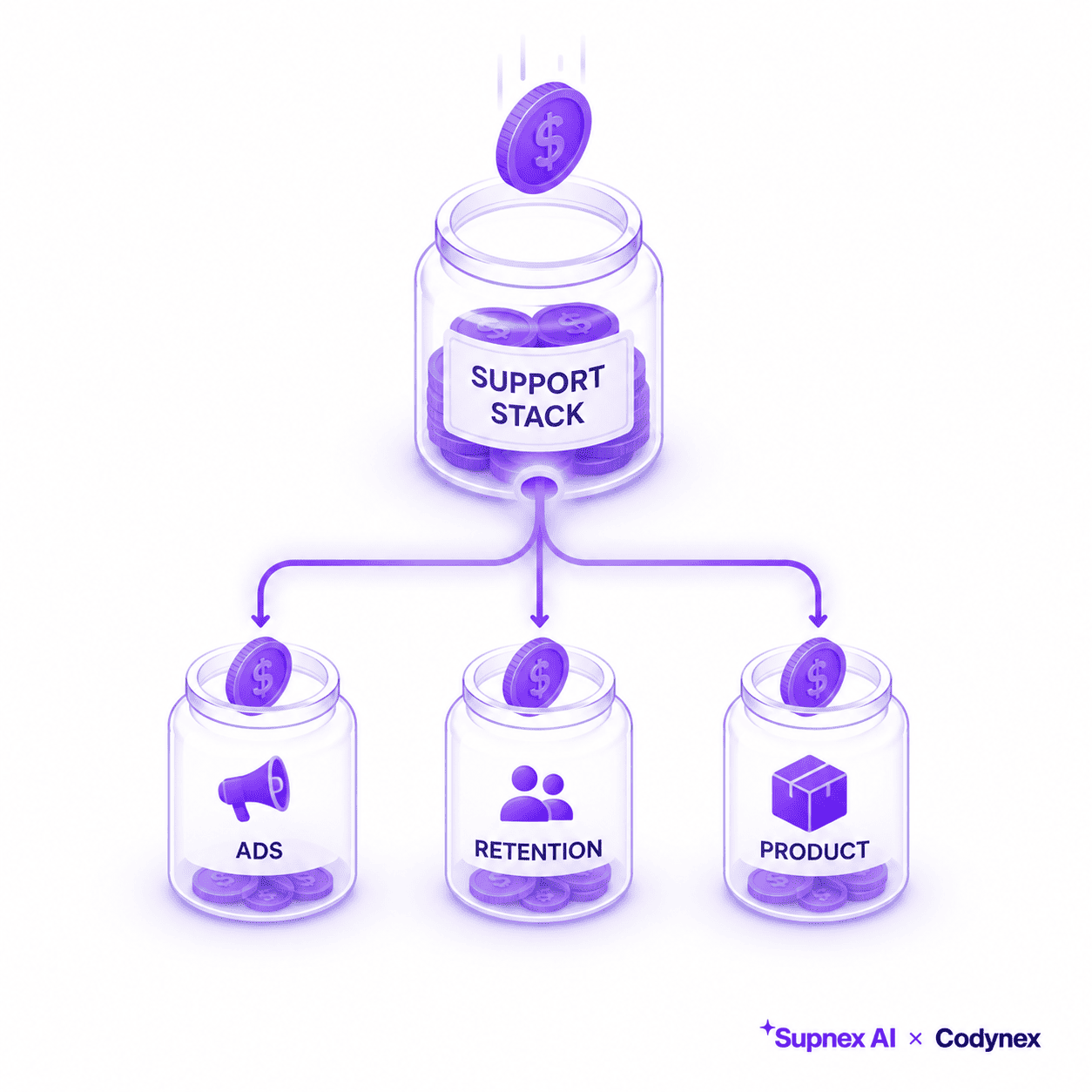
One outdoor gear store cut a $684/month stack (helpdesk, chatbot, tracking app, chat add-on) down to Supnex at $79, kept their email tool, and moved the savings into retargeting. Their words: "Support went from a cost center with a dashboard to a line item I don't think about."
The Audit That Takes Five Minutes
Do this today, even if you never talk to us: list every support-adjacent subscription, its monthly cost, and next to each one write what it resolves versus what it organizes. Most founders are genuinely startled by the ratio.
Then bring us the list. Book a Supnex demo, and we'll go through your current stack line by line, show you exactly which tools Supnex replaces at $79/month, which ones you should keep, and what your new number looks like.
Comments ()