
Why Your Company Needs a ‘Chief AI Officer’
Why the Chief AI Officer is the most critical C-Suite role in 2026. Learn how to move your enterprise from AI tools to autonomous agentic workflows with Codynex.
In 1995, most CEOs viewed the "Internet" as a technical curiosity managed by the IT department. By 2005, those who hadn't integrated a digital-first strategy into their core business were already obsolete.
In 2026, we are at a similar crossroads with Agentic AI. Most enterprises are currently stuck in "Pilot Purgatory." They have a dozen different subscriptions to LLM tools, a few chatbots handled by Marketing, and perhaps an experimental data project in R&D. But they lack a cohesive architecture. They are buying tools when they should be building a new operating layer.
This is why the role of the Chief AI Officer (CAIO) has moved from a "trend" to a structural necessity. Whether you hire one or partner with a firm that acts as one, your organization needs a centralized vision for intelligence.
From "Buying Software" to "Deploying a Workforce"
The traditional software model was static: you bought a seat, you typed in data, and the software stored it. AI Agents have flipped this script. We are no longer just using tools; we are deploying digital workers.
An AI-ready workforce doesn't just "use ChatGPT." It utilizes custom agents that:
- Monitor procurement cycles to predict supply chain breaks.
- Cross-reference legal compliance across international borders in real-time.
- Synchronize sales outreach with live inventory and market shifts.
Without a CAIO, or a CAIO-level strategy, these agents remain siloed. You end up with "Shadow AI," where departments use unvetted endpoints, risking your intellectual property and creating a fragmented, inefficient ecosystem.
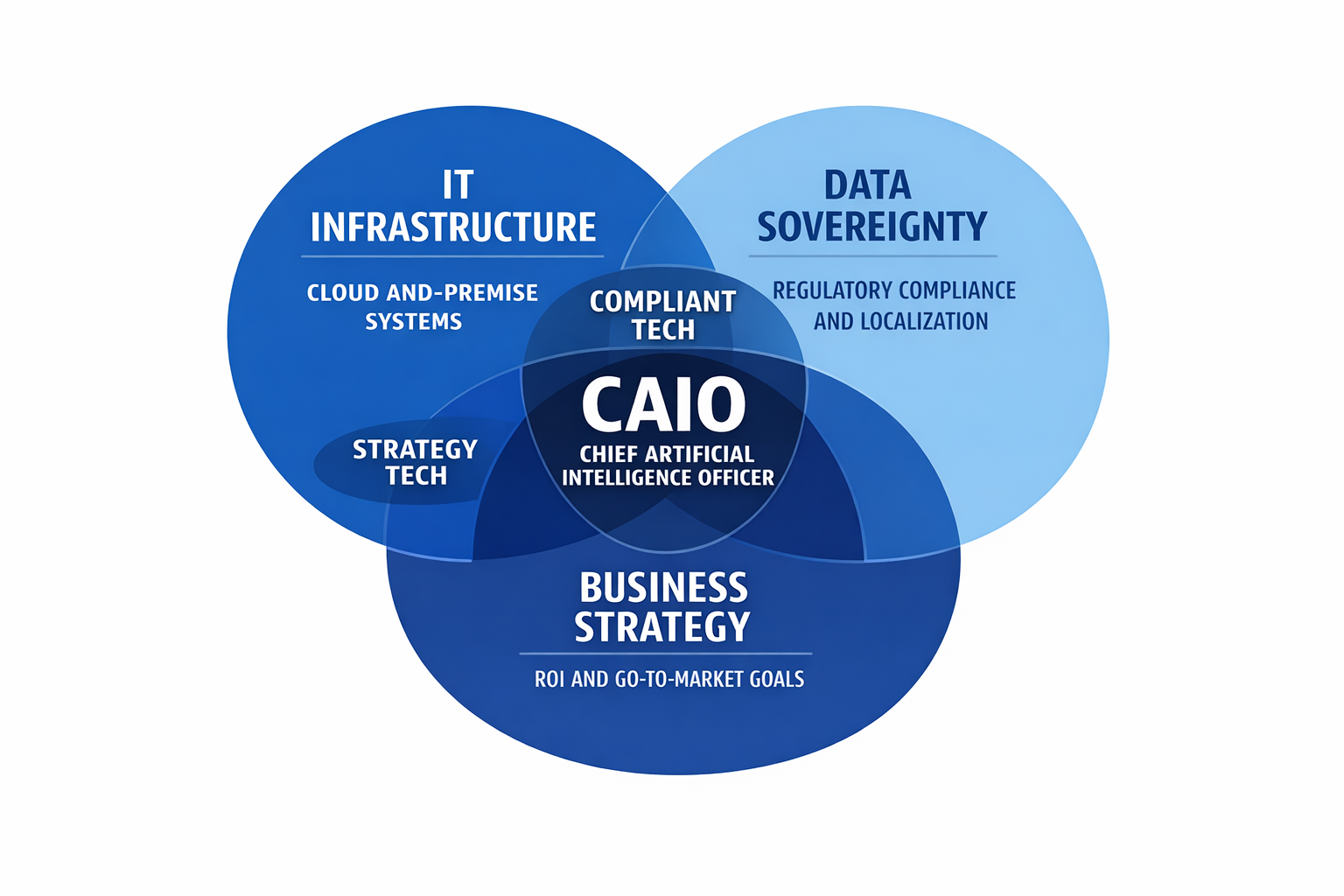
The Three Pillars of an Enterprise AI Strategy
If you aren't ready to add a new six-figure executive to your payroll today, your current leadership must execute on these three pillars:
1. Governance and "Secure-by-Design" Architecture
Who owns the prompts? Where does the data go? A strategic AI lead ensures that your proprietary data, the "gold" of your company, stays within your firewall. They move the company away from commodity public models toward bespoke, fine-tuned solutions that belong to you.
2. Cross-Departmental Interoperability
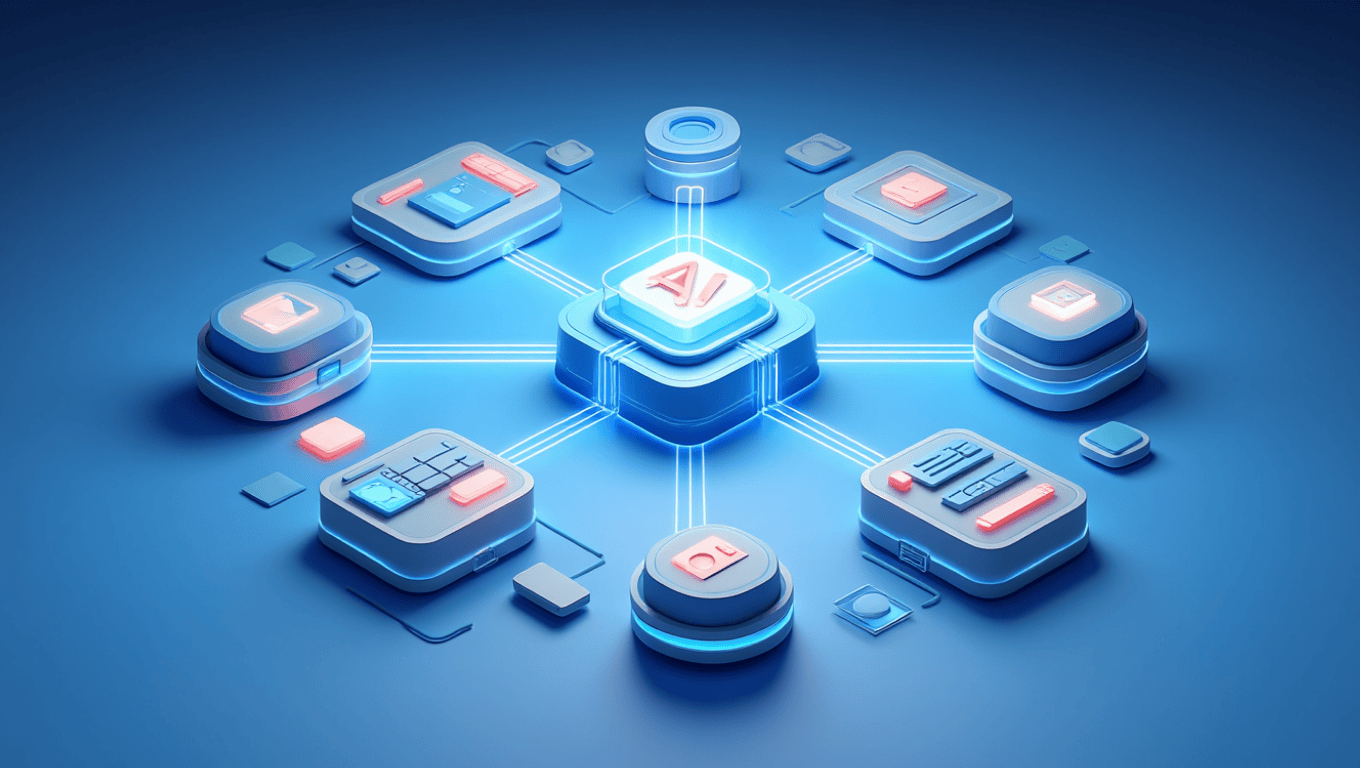
The true power of AI isn't in a single chatbot; it’s in Agent-to-Agent (A2A) communication. A CAIO ensures that the "HR Agent" can talk to the "Finance Agent" to automate onboarding and payroll without human friction. This is the shift from automation to autonomous operations.
3. The Build vs. Buy Roadmap
Not every AI problem requires a custom build. A CAIO identifies which tasks can be handled by "off-the-shelf" tools and which require a proprietary moat. If your AI strategy relies 100% on third-party providers, you have no competitive advantage. You are simply renting intelligence that your competitors also have access to.
The Risk of "Wait and See"
There is a common CEO temptation to wait until the "AI dust settles." This is a strategic error. Unlike previous tech cycles, AI is an iterative learner. The companies that begin building their proprietary data pipelines and agentic workflows now are creating a compounding advantage. By 2027, the gap between "AI-Native" companies and "AI-Added" companies will be an unbridgeable chasm.
Your Fractional CAIO
At Codynex, we don't just build agents; we architect the future of your business. We act as your strategic partner, the "Fractional CAIO", to bridge the gap between high-level business goals and technical execution.
We help you stop "trying" AI and start operating through it.
Is your organization AI-ready or just AI-aware?
Book a Strategic AI Audit with Codynex
Let’s map your 2026 roadmap today.

Comments ()