
Build vs. Buy: Saving $200k on Your Enterprise AI Architecture
A deep dive for CTOs on the Build vs. Buy AI dilemma. Learn how custom agentic architecture reduces latency, saves costs, and secures data.
Most CTOs are currently renting their company's intelligence. While off-the-shelf LLMs offer speed, they often create massive technical debt. In 2026, the gap between "using AI" and "owning AI" is worth millions. You need a strategy that protects your margins and your data. Renting is for testing, but building is for winning.
Public AI wrappers are the "gateway drug" of enterprise automation. They are easy to deploy but difficult to scale securely. As your query volume grows, so does your dependence on third-party pricing. For core business logic, commodity tools are no longer enough to maintain a competitive moat. The urgency is clear: data sovereignty is the new gold standard.
The Strategic Value of Ownership
Custom agents offer control that API wrappers simply cannot match. You must evaluate your needs based on three critical technical factors. These factors determine your long-term scalability and security.
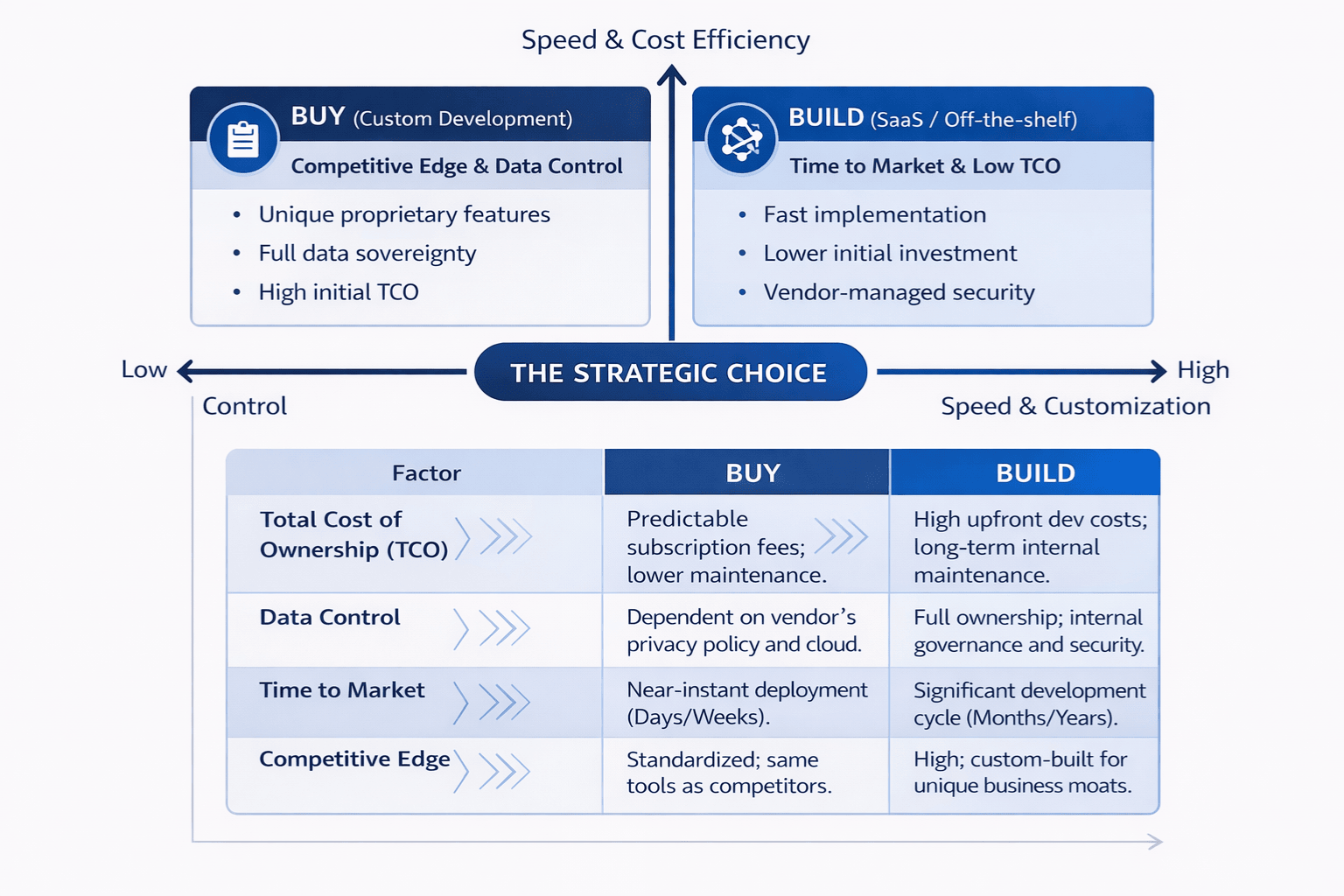
1. Data Sovereignty and Security
Public endpoints risk leaking your proprietary prompts and customer data. Even with enterprise agreements, your metadata often remains outside your direct control. A custom-built agent lives within your private cloud. This ensures total compliance with evolving 2026 data privacy laws.
You cannot afford to send your "Core IP" through a third-party tunnel. Secure-by-design architecture starts with localizing your intelligence. This prevents competitors from indirectly benefiting from your refined datasets.
2. Token Economics and Scalability
Relying on external providers creates unpredictable monthly operating expenses. Token pricing can fluctuate based on model upgrades or provider shifts. Building a specialized, distilled model allows for stable infrastructure costs.
- Buy: Best for low-volume, generic tasks like email drafting.
- Build: Essential for high-volume, proprietary workflows like real-time fraud detection.
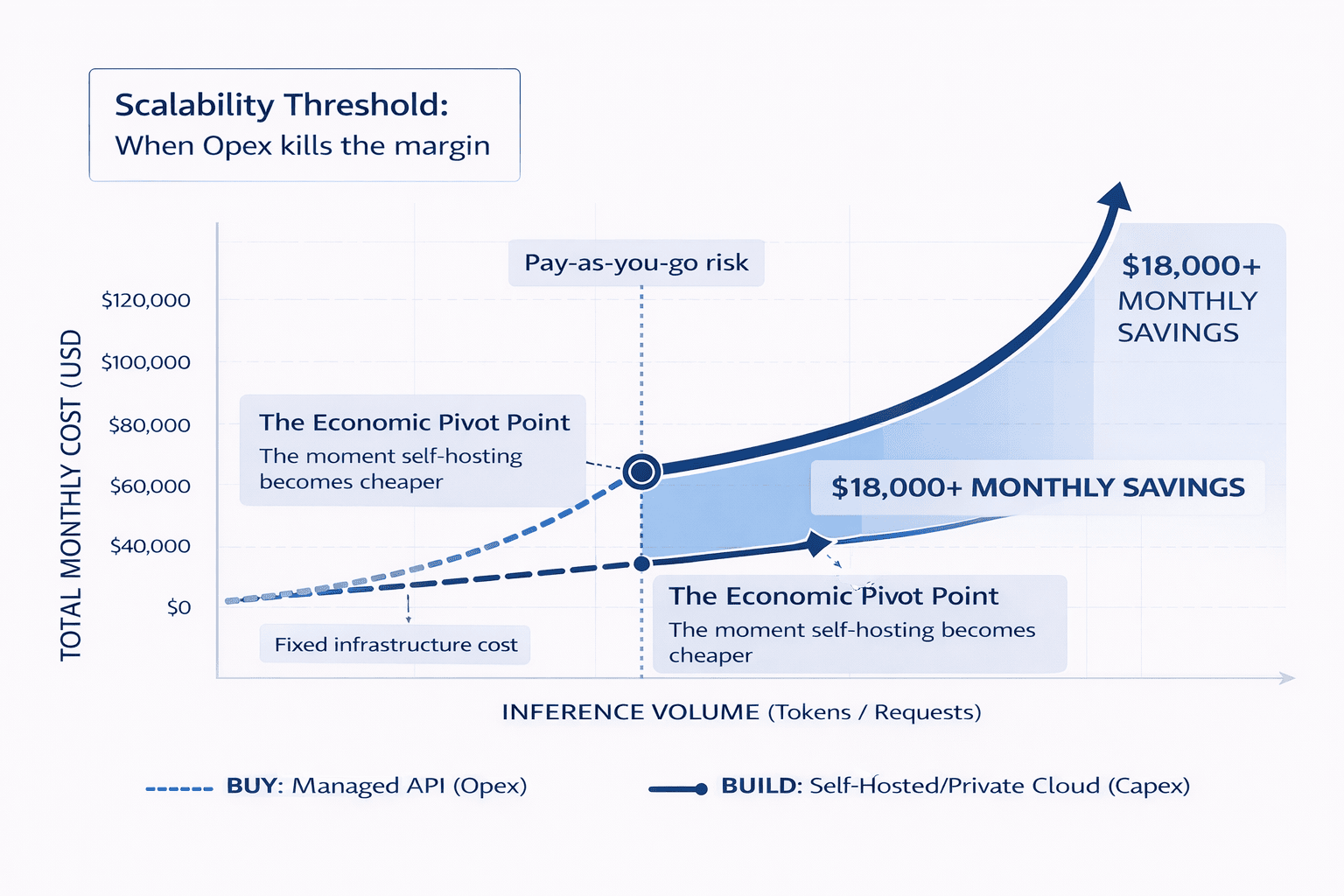
When you reach one million queries, the "Buy" model becomes a liability. Custom models allow you to move from variable Opex to predictable Capex. This shift is vital for maintaining healthy profit margins at scale.
3. Performance and Latency
Generic models are "jacks of all trades" but masters of none. They carry billions of parameters that your specific task does not need. Fine-tuned agents reduce latency by focusing only on relevant parameters. This leads to faster response times for your end-users.
Your customer experience depends on millisecond improvements. Large, general models often suffer from unpredictable lag during peak hours. A custom agent on dedicated hardware provides consistent, high-speed performance.
4. Avoiding Vendor Lock-In
The AI market is moving faster than most contracts can keep up with. If you build on a proprietary wrapper, switching providers becomes a nightmare. You lose your custom instructions, your fine-tuning, and your workflow logic.
Custom architecture allows you to swap underlying models as better versions emerge. You own the orchestration layer, not the provider. This flexibility is your greatest insurance policy against market volatility.
"The ROI becomes obvious within the first month of deployment."
Our clients see a 60% reduction in manual data entry costs. By moving from a public API to a self-hosted Llama-3 variant, one firm saved $18,000 monthly. They also reduced their hallucination rate from 7% to less than 1%. These metrics prove that custom builds pay for themselves in under two quarters.
Stop renting your competitive advantage. Book a technical audit with Codynex to see if your architecture is ready for a custom build. We help you move from "AI-enabled" to "AI-owner."


Comments ()