
Shadow AI: The CTO’s Guide to Governing Unvetted LLM Endpoints
A CTO's guide to eliminating Shadow AI. Learn how to govern unvetted LLM endpoints, prevent data leakage, and build a secure AI gateway with Codynex.

Your employees are already using AI. If you have not provided them with a secure enterprise solution, they are using "Shadow AI." This refers to unvetted LLM endpoints and public tools used without IT oversight. In 2026, this is the single greatest threat to corporate data integrity. You must move from a policy of restriction to one of secure governance.
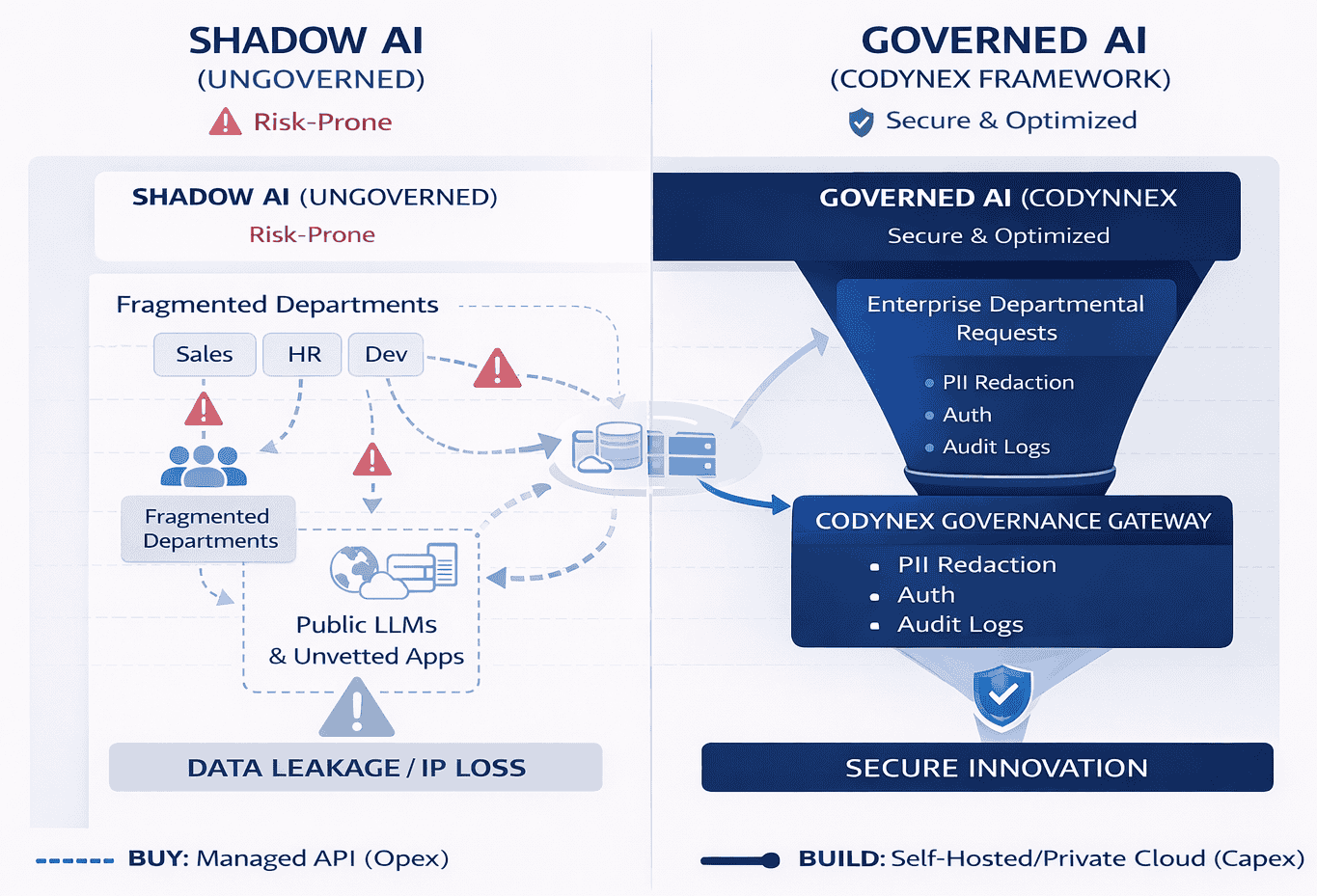
Shadow AI thrives where official tools fail to meet user needs. When a developer uses a public bot to debug proprietary code, your "Core IP" leaves the building. When an HR manager uploads employee records for summarization, you face a massive compliance breach. Ignorance is no longer a defense against data leakage. The urgency for a central governance framework is absolute.
The Hidden Risks of Unvetted Endpoints
Unchecked AI usage creates a fragmented security landscape. You cannot protect what you cannot see. These unvetted tools introduce three critical vulnerabilities into your enterprise architecture.
1. Intellectual Property and Data Leakage
Most public AI models use input data to train future versions. Every prompt sent by your staff potentially informs the intelligence of your competitors. A custom governance layer ensures that all data remains within your private cloud. This creates a "one-way valve" where you benefit from AI without feeding the public model.
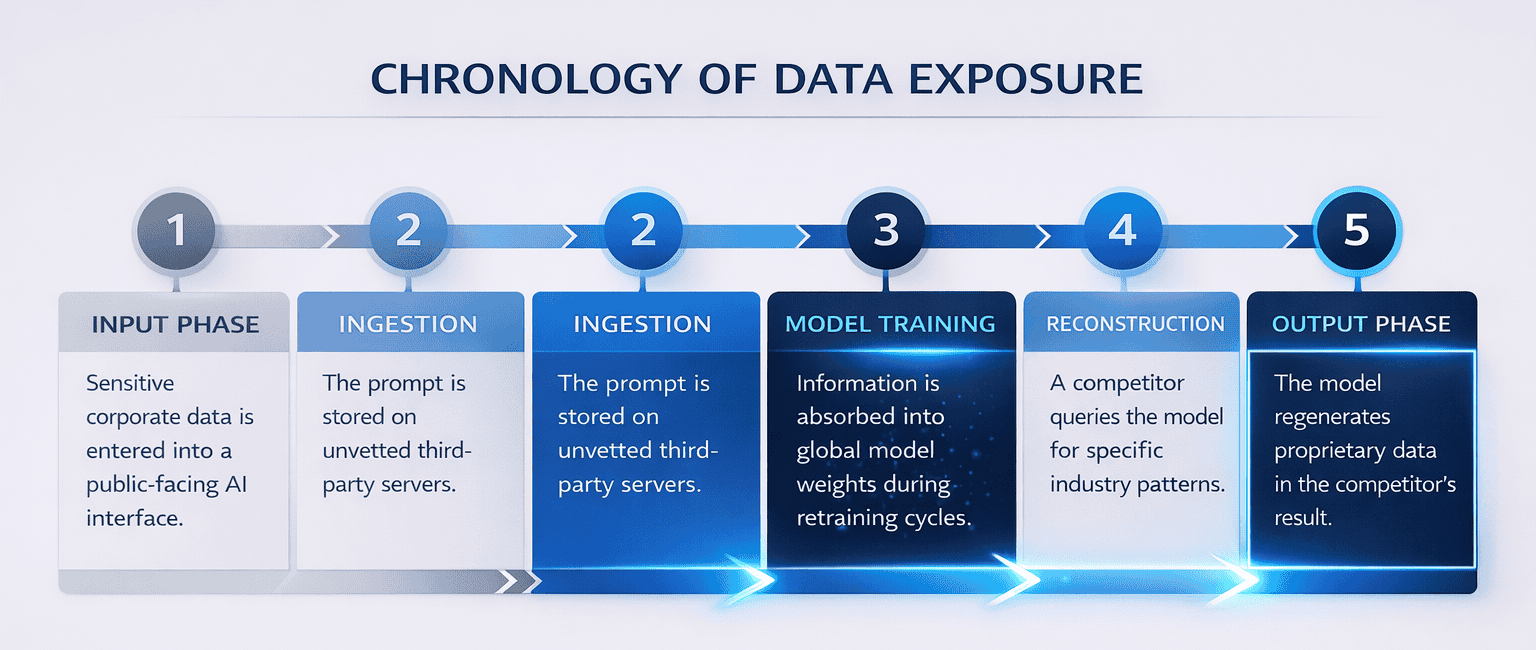
You must establish a secure-by-design gateway for all AI traffic. This allows you to monitor data flow without stifling innovation. It turns a security nightmare into a controlled strategic asset.
2. The Compliance and Regulatory Gap
Regulatory bodies in 2026 are increasingly aggressive regarding AI transparency. Using unvetted tools makes it impossible to provide an audit trail for automated decisions. If a customer challenges an AI-driven outcome, you must be able to prove the logic used.
- Risk: Fines for non-compliance with global data privacy standards.
- Solution: A centralized agentic hub that logs every interaction and decision point.
Centralized governance provides the documentation required for modern legal audits. It moves your AI usage from a "black box" to a transparent system. This is vital for maintaining trust with stakeholders and regulators.
3. Cost Fragmentation and Redundancy
Shadow AI leads to "SaaS Bloat" across different departments. Marketing, Sales, and Engineering often buy separate subscriptions for the same underlying capabilities. This results in redundant spending and zero economies of scale.
By centralizing your AI infrastructure, you can negotiate better enterprise rates. You also ensure that every department uses the most efficient model for their specific task. This optimization is the key to maintaining a healthy ROI on your AI investments.
4. Creating the "Golden Path" for Developers
You cannot stop the use of AI, but you can direct it. Provide your team with a "Golden Path"—a set of approved, secure, and high-performance AI tools. If the secure option is faster and more capable than the public one, Shadow AI disappears.
The goal of governance is to enable, not to block. When you provide a robust internal LLM gateway, you empower your team to build safely. This internal ecosystem becomes your company's private intelligence engine.
"True governance is not about saying 'no'; it is about providing a better 'yes'."
Our clients see a 40% improvement in security compliance scores within three months. By deploying a unified AI gateway, one enterprise eliminated over 200 unvetted third-party subscriptions. They also gained total visibility into their data usage patterns. These steps turned a chaotic risk into a streamlined competitive advantage.
Stop letting Shadow AI drain your company's value. Book a governance strategy session with Codynex to build your secure enterprise gateway. We help you govern the future of your intelligence.



Comments ()