
Fine-Tuning vs. RAG: The 2026 Business Guide
Fine-Tuning vs. RAG? We break down the 2026 cost, complexity, and use cases to help you choose the right custom AI strategy for your business.
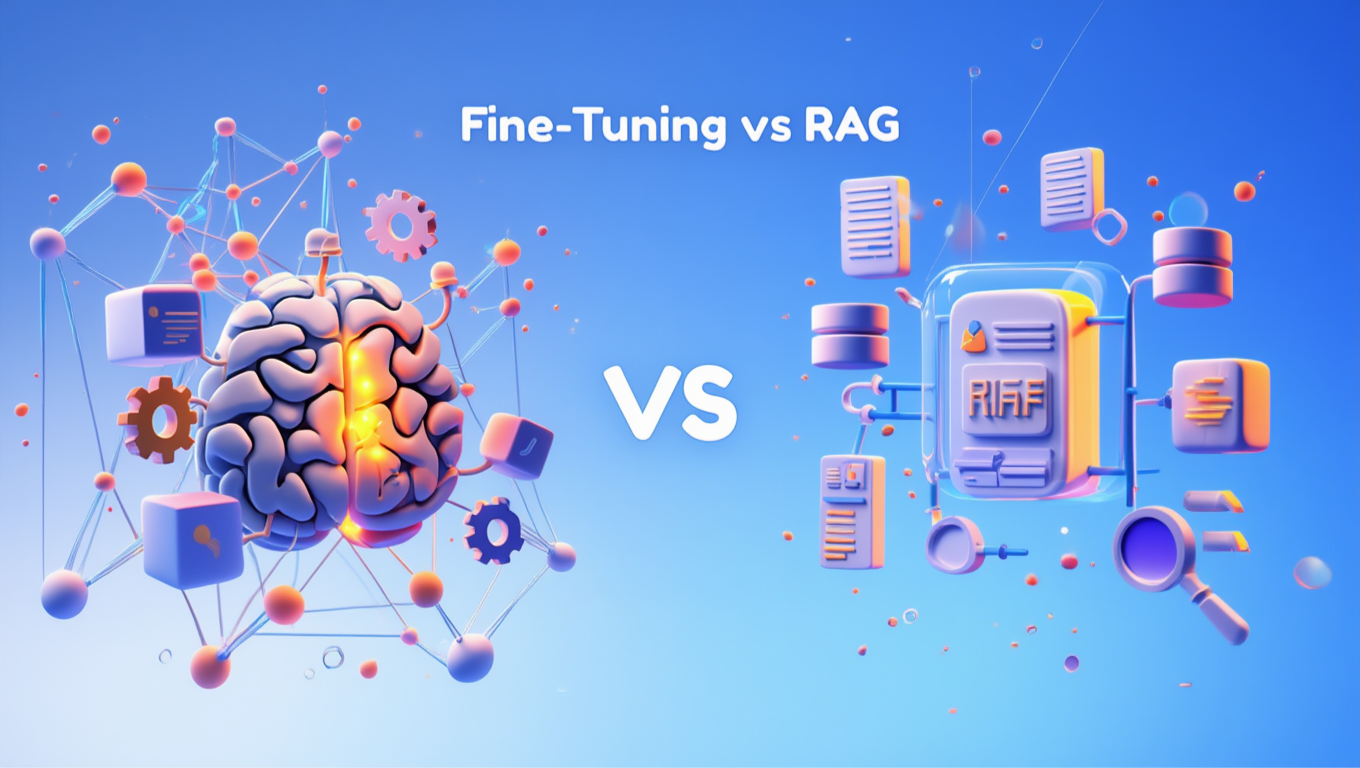
As businesses race to adopt generative AI in 2026, the most common question we hear at Codynex is not whether to use AI, but how to customize it. Leaders want an AI that knows their products, speaks their language, and understands their internal data.
- The industry offers two primary paths to achieve this: Fine-Tuning and Retrieval Augmented Generation (RAG).
Choosing between these two is not just a technical detail. It is a strategic business decision that dictates your budget, timeline, and user experience quality. Making the wrong choice can lead to a chatbot that confidently lies or a system that burns through your budget without delivering value.
Understanding Fine-Tuning: The Specialist
Fine-tuning is the process of taking a general-purpose model (like GPT-4 or Llama 3) and retraining it on your specific data.
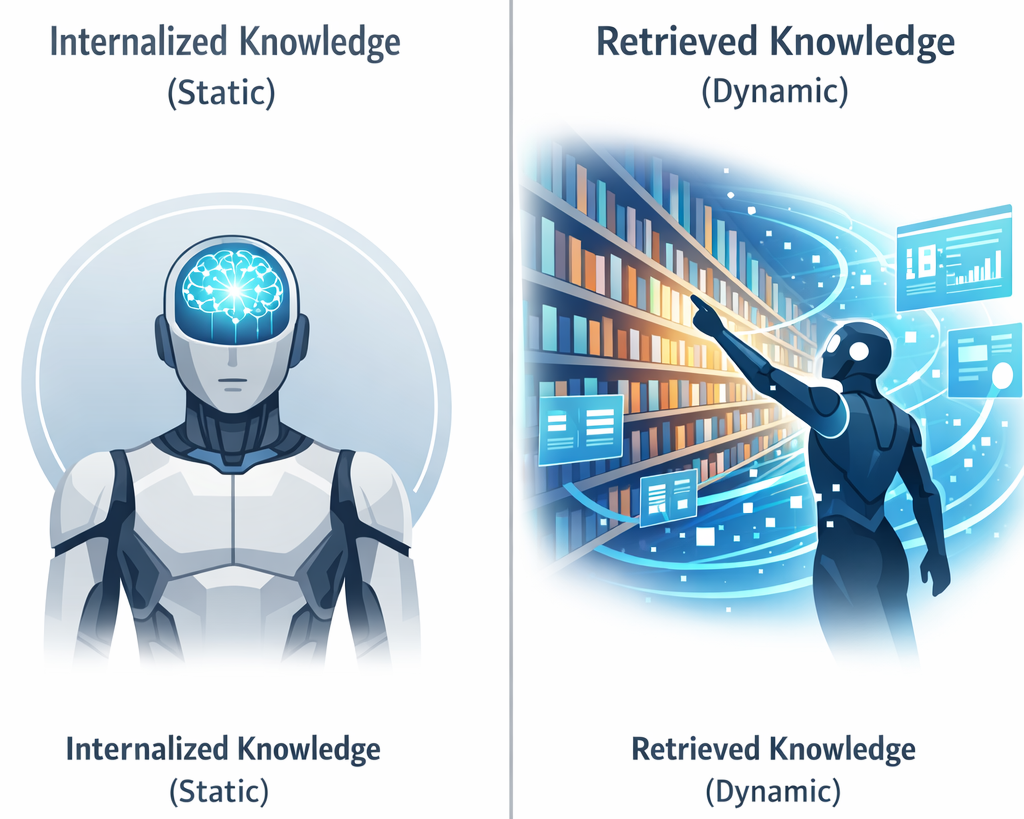
- The Analogy: Think of this as sending a smart generalist student to medical school. After years of specialized training, they internalize the knowledge to become a doctor.
In a business context, we use fine-tuning when the goal is to change the behavior, tone, or reasoning style of the AI.
- Real-World Example: Codynex helped a legal firm fine-tune a model specifically to draft contracts in their unique voice. The model learned to write exactly like a senior partner, ensuring consistent, high-quality output without needing long, complex prompts.
Understanding RAG: The Librarian
Retrieval Augmented Generation works completely differently. Instead of retraining the brain of the model, RAG gives the model access to a vast, "open-book exam."
- The Analogy: This is the "Librarian" approach. When a user asks a question, the system searches your live documents, finds the relevant paragraphs, and feeds them to the AI to generate an answer.
- Best For: Businesses with data that changes frequently. If you update a price or policy today, a RAG system knows about it instantly. A fine-tuned model would need to be retrained to learn that new fact, which is slow and expensive.
The Cost and Complexity Trade-off
For most Small and Medium Businesses, the financial structure of these two strategies is very different.
- Fine-Tuning (High Upfront Cost): Requires a heavy investment in data preparation. You must curate thousands of perfect example pairs and pay for expensive GPU compute time to run the training.
- RAG (Higher Operational Cost): Generally cheaper to start, as the complexity lies in engineering the search mechanism. However, ongoing costs can be higher because every query involves a database search and a larger prompt sent to the LLM.
At Codynex, we help clients model these costs over a two-year horizon to determine the best ROI for their specific volume.
When to Use Which?
The decision matrix is surprisingly simple when you break it down by use case:
Use RAG if you have a KNOWLEDGE Problem:
- Examples: Customer support bots, internal HR assistants, or any tool answering "What does document X say?" reliably.
Use Fine-Tuning if you have a STYLE or STRUCTURE Problem:
- Examples: Code generation agents, marketing copywriters, or medical diagnosis tools where the specific format and reasoning pattern are more important than retrieving a specific fact.
Codynex Insight: We often find companies ask for fine-tuning because it sounds prestigious, but 80% actually need a well-engineered RAG system to solve their data accessibility issues.
The Hybrid Future
The most sophisticated AI applications in 2026 often ignore this binary choice and use both.
We frequently build systems where a model is fine-tuned to understand industry jargon and tone, but is also connected to a RAG pipeline to access real-time data. This gives you the best of both worlds: a model that sounds like an expert and always has the latest information.
At Codynex, we specialize in architecting these hybrid solutions. If you are struggling to decide between fine-tuning and RAG, we invite you to book a strategy session with our engineering team.



Comments ()