
Your Shopify Store Is Already in ChatGPT. Is Your Support Ready?
Shopify Agentic Storefronts put eligible stores in ChatGPT, Copilot and Google AI Mode by default. What that means for your customer support.

On March 24, 2026, Shopify switched on Agentic Storefronts by default for eligible US merchants. If your products are in the Shopify Catalog, shoppers can now discover them inside ChatGPT, Microsoft Copilot, Google's AI Mode and the Gemini app, without you building anything. You can check and manage the channels from your Shopify admin.
Most of the coverage has been about discovery: will AI recommend my products? This post is about the next step, the one that lands on your desk. When an AI assistant sends someone to your store, what happens when they have a question?
What Actually Changed in 2026
A quick timeline, because the headlines blurred it.
- January 11, 2026: Shopify announced its agentic commerce platform: the Universal Commerce Protocol (UCP, co-developed with Google), a Storefront MCP server for every store, and an Agentic Plan for brands not on Shopify.
- March 2026: OpenAI scaled back ChatGPT's Instant Checkout. Shopify said purchases from ChatGPT would finish on the merchant's own checkout, in an in-app browser on mobile or a new tab on desktop. Orders land in your Shopify admin as usual.
- March 24, 2026: Agentic Storefronts went live by default for eligible US merchants.
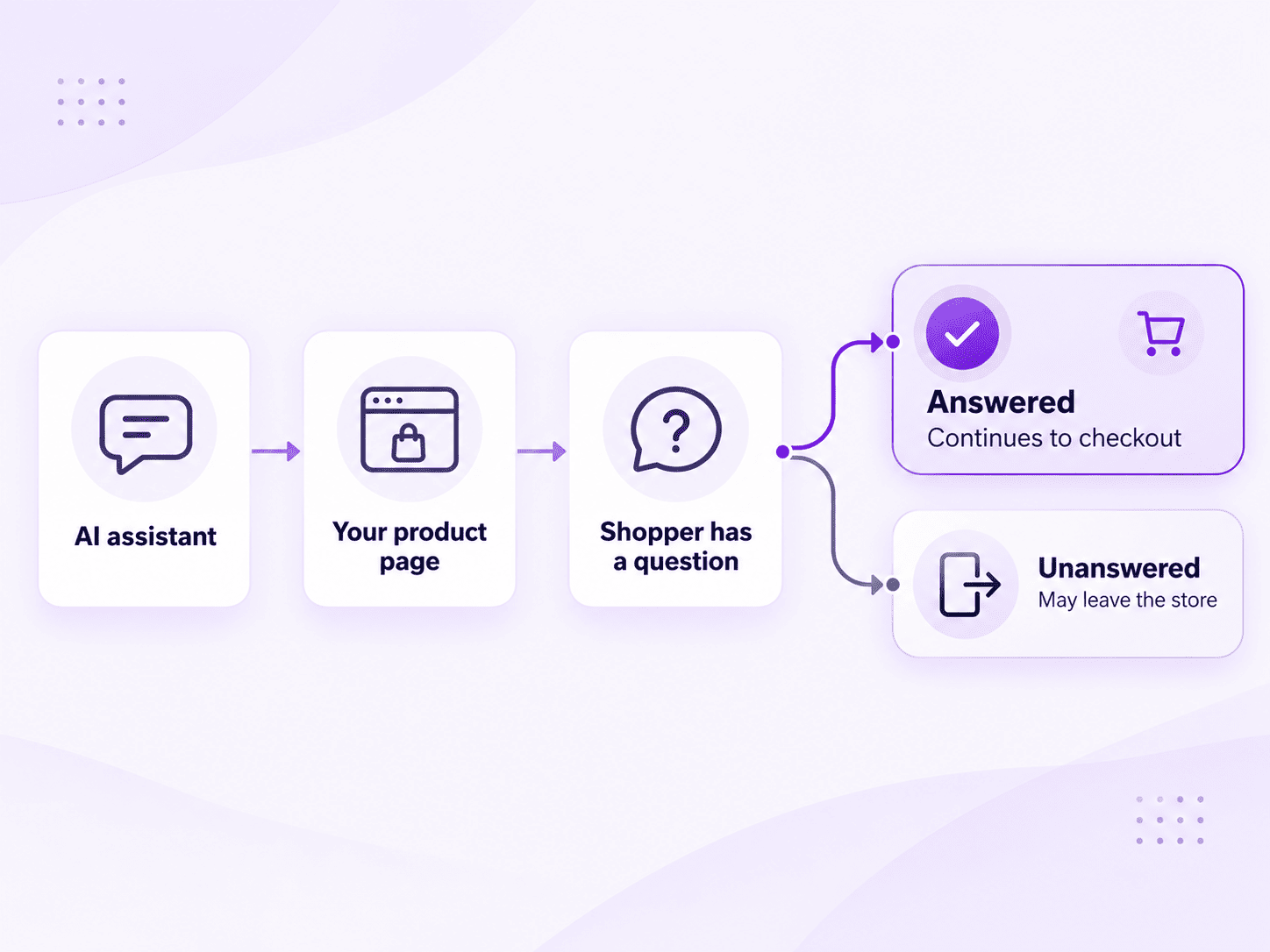
The practical result: AI assistants are a new front door, but the sale still finishes on your store. That's where questions get asked.
The AI-Referred Shopper Arrives Further Along
Someone who found you through a conversational assistant has usually done their comparing already. They asked about materials, price ranges or use cases, got a shortlist, and clicked through to you. They show up with specific, late-stage questions: "Does this ship to Ontario before the 20th?" "Is the 50ml version in stock?" "Can I return it if it doesn't fit?"
Those are buying questions. If nobody answers them on your site, the assistant that sent the shopper is one tab away, ready to suggest someone else.
Your Store Data Is Now Read by Machines on Both Ends
Agentic Storefronts work from your structured product data: titles, descriptions, variants, prices and policies. Your own on-site support should work from the same source. If the two disagree, because your FAQ says 30-day returns but your policy page says 14, the shopper gets two answers and trusts neither.
Three checks worth doing this month:
- Policies: shipping, returns and refunds published in Shopify's policy settings, current and specific.
- Product descriptions: the facts a shopper needs (dimensions, materials, compatibility, care) written as text, not only in images.
- Variants: clean option names ("Medium / Navy"), not internal codes.
Where Supnex Fits
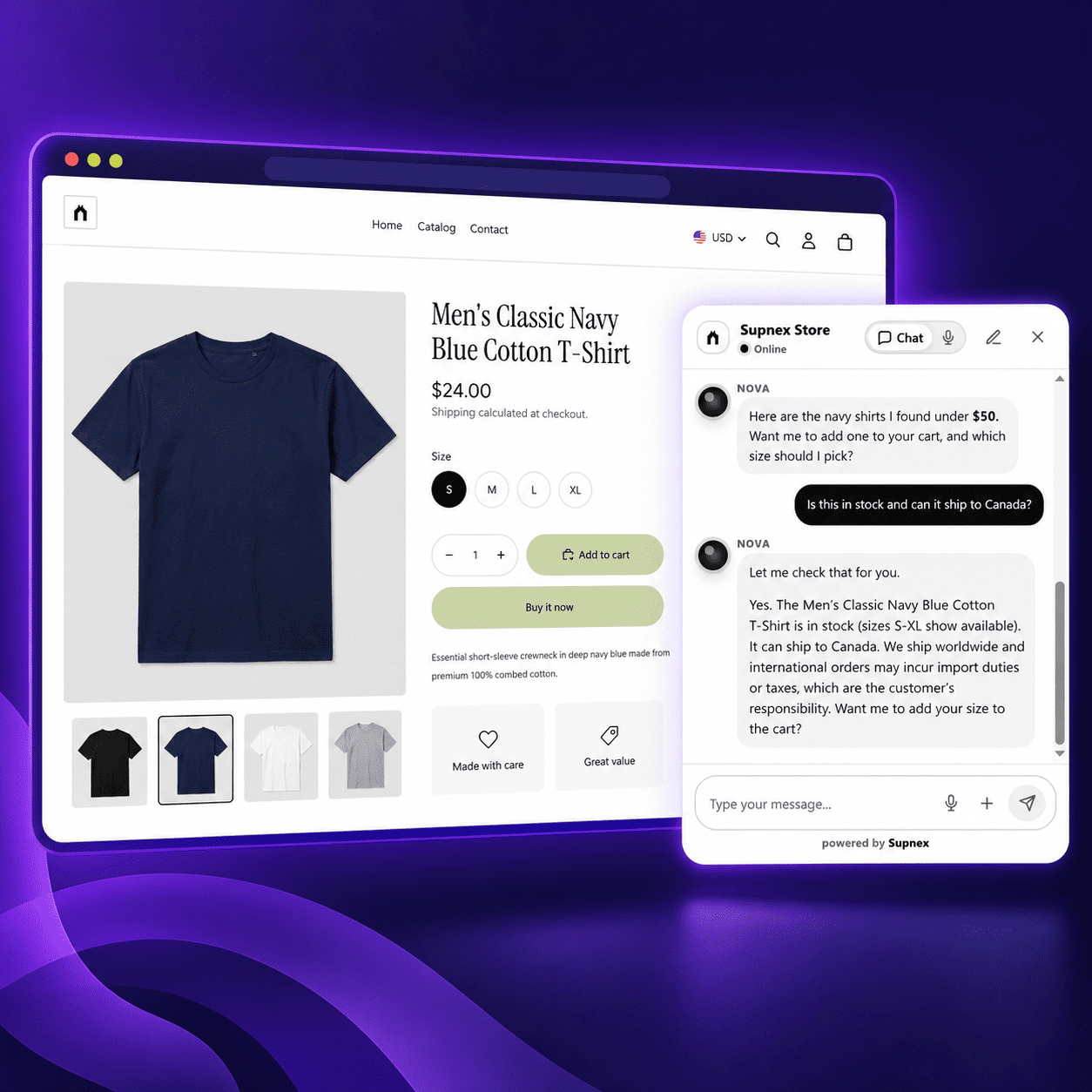
Supnex AI, built by Codynex, answers on-site questions using the same layer Shopify built for agents: it's grounded in your catalog, policy, cart and order context through Shopify's Storefront MCP. The shopper who arrives from ChatGPT with a sizing question gets an answer from your real size data on the product page they're looking at. Supnex reads real-time page context, so they don't have to repeat themselves.
If Supnex can't answer confidently, it escalates instead of guessing. Answering from the same source the AI assistants read is what keeps your story consistent from the first click to checkout.
What Not to Worry About
You don't need a ChatGPT app. You don't need a developer. Shopify built the agent-facing side and turned it on. Your job is the part only you can do: accurate store data and a fast answer when the shopper reaches your site.
CTA: AI assistants are already sending you shoppers. Book a live Supnex demo, and we'll show you what happens when one of them asks your store a question at 11PM.
Comments ()